Not sure what the charge air cooler does? See what a charge air cooler is and how it works first.
In this article
What the Charge Air Cooler Does on a Mack
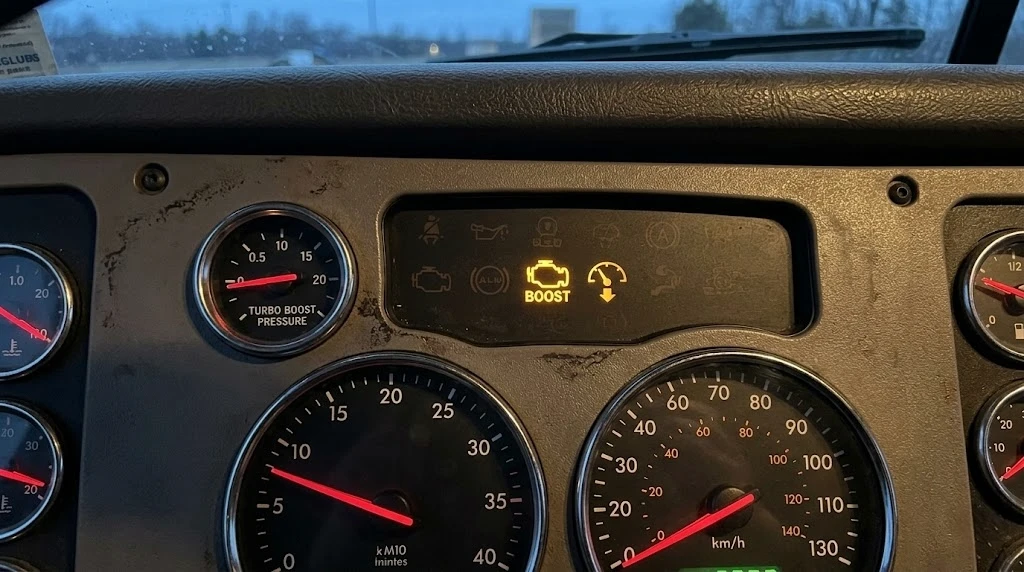
Every modern Mack — Anthem, Pinnacle, Granite, or the older Vision and CH series — runs a turbocharged diesel. The turbo compresses intake air to force more oxygen into the cylinders, but compression heats that air to 150–200 °C, making it less dense and less useful for combustion.
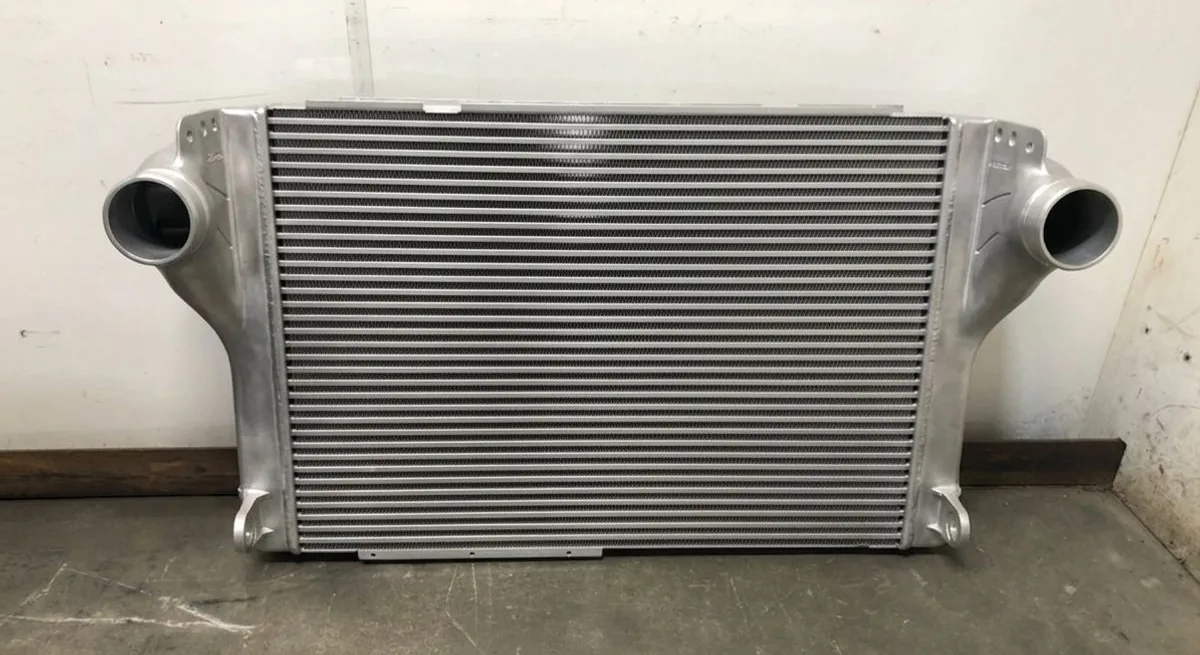
The charge air cooler (CAC) — also called an air-to-air intercooler — sits in front of the radiator and cools that compressed air by 50–80 °C before it reaches the intake manifold. On the MP7 and MP8 engines that power most 2007+ Macks, the CAC is what lets the engine make its rated 325–505 hp while meeting emissions targets. When the CAC leaks or clogs, the engine loses air density, the ECM cuts fuelling, and the truck gets slow, thirsty, and smoky — in that order.
Mack CAC Fitment by Model & Engine
Mack has been part of the Volvo Group since 2001, and the MP7/MP8 engines share their architecture with Volvo's D11/D13. Some CAC cores interchange between Mack and Volvo VNL applications — but mounting brackets, inlet/outlet orientation, and model-year changes mean you should always confirm by part number, not by assumption.
| Mack Model | Years | Engine | Notes |
|---|---|---|---|
| Anthem | 2018–present | MP8 (13L) | Highway tractor; aerodynamic front end puts the CAC low in the debris path, similar to Cascadia/T680 layouts |
| Pinnacle (CHU/CXU) | 2006–present | MP7 / MP8 | The most common Mack highway truck of the 2010s; end-tank crimp failures typical after 600,000 km |
| Granite (GU713/GU813) | 2007–present | MP7 / MP8 | Vocational — dump, mixer, roll-off. Hardest duty cycle of any Mack; CACs fail earliest here (vibration + debris) |
| Vision / CH / CL | 1988–2006 | E7 / E-Tech / ASET | Older cores are simpler and cheaper; many aftermarket options; check for fin corrosion before assuming end-tank failure |
| Titan (TD713) | 2008–2016 | MP10 (16L) | Heavy-haul; larger core, fewer aftermarket options — verify dimensions carefully |
5 Signs Your Mack CAC Is Failing
A Mack CAC fails two ways: a boost leak (cracked end tank, split weld, failed coupler) or internal fouling (oil film and debris blocking the fins). Vocational trucks add a third: physical damage from rocks, rebar, and pressure-washer abuse. Here's what each looks like from the driver's seat.
1 Power Loss Under Load — the Truck "Falls on Its Face" on Grades
The classic complaint. A loaded Granite that used to climb out of the pit in 4th now needs 3rd; an Anthem that held 100 km/h on a grade now drops to 85. A leaking CAC vents boosted air before it reaches the manifold, the ECM sees lower boost than requested, and it cuts fuel to protect the engine. Small end-tank crack: 5–10% power loss. Failed crimp joint or split coupler: 20% or more — enough that drivers report it feels like a bad turbo.
2 Black Smoke Under Acceleration
Less air with the same fuel demand means incomplete combustion — visible as black smoke when you get on the throttle, especially pulling away loaded. On MP7/MP8 engines this also drives exhaust temps up and loads the DPF faster, which means more regens and, eventually, an early DPF replacement if the leak is ignored. If you're seeing black smoke plus more frequent regens, check the charge air circuit before blaming injectors.
3 J1939 Fault Codes: SPN 102 FMI 1/18, or Check Engine With Underboost
Mack's electronics flag boost faults as SPN 102 (Intake Manifold Pressure) with FMI 1 or 18 — pressure below normal. On trucks with Mack GuardDog Connect, the fault may phone home before the driver even mentions it. As with any underboost code, the CAC is a prime suspect but not the only one: a stuck wastegate, cracked charge pipe, or failing turbo produces the same code. The pressure test below isolates the CAC in 30 minutes.
Don't just clear SPN 102 and keep working. An MP8 running a persistent boost leak over-fuels at low boost, spikes exhaust temperature, and accelerates DPF and SCR wear. On a mixer or dump truck doing constant low-speed high-load cycles, that damage compounds fast — a $600 CAC problem becomes a $4,000 aftertreatment problem.
4 Fuel Economy Drops 5–10%
Less dense intake air means more fuel for the same torque. On a highway Pinnacle doing 150,000+ km a year, a 7% penalty is thousands of dollars of extra diesel annually. On vocational trucks, watch litres-per-hour instead — a Granite that used to burn 18 L/hr mixing now burning 20 L/hr with no route change is telling you something. Fuel drift plus any other symptom on this list justifies a boost test.
5 Oil Residue on the CAC, Boost Pipes, or Couplers
Squeeze every silicon coupler in the charge air circuit and look at the CAC face. Oily film on the outside of the core or wet, swollen couplers means oil is in the boost circuit — usually from turbo shaft seal wear, sometimes from a heavily blow-by-loaded crankcase vent. The oil itself then coats the CAC's internal fins and cuts cooling efficiency. On Macks with 700,000+ km, oil fouling plus fin corrosion is the most common combination we see: the CAC still holds pressure but can't cool.
Rule of thumb: two or more of these signs together means pressure-test before parts-swapping. A $60 coupler produces all five symptoms. Test first — it takes 30 minutes and saves misdiagnosis money.
How to Diagnose a Mack Boost Leak
Step 1 — Visual Inspection
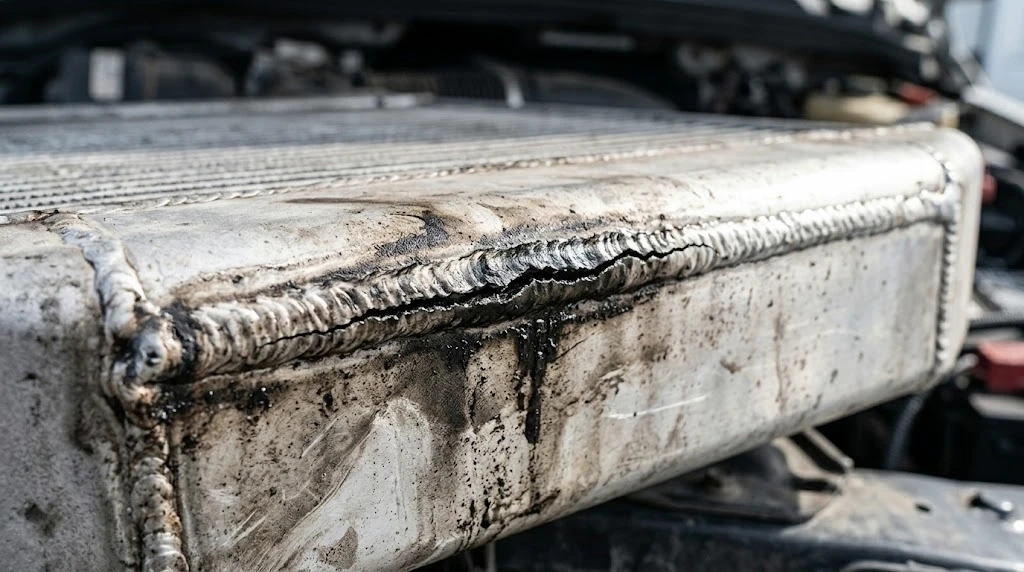
Open the hood (or tilt it on a Granite) and inspect the CAC face and both plastic end tanks. Run a thumb along the crimp joint where each tank meets the aluminium core — cracks feel like a ridge and often show a dark oil stain. On vocational trucks, look hard at the lower third of the core for impact damage and bent fins from pressure washing. Check every charge pipe weld and every coupler clamp.
Step 2 — Shop Air Pressure Test
Engine off and cool: pull both boost boots from the CAC, plug one side, feed shop air into the other through a regulator with a gauge. Pressurize to 20–25 psi and spray soapy water over the core, tanks, and welds. Bubbles = leak = replacement. Cracked end tanks on MP7/MP8 CACs cannot be reliably repaired — the plastic re-cracks beside any weld or epoxy within months under boost cycling.
Cap the test at 30 psi. Mack CACs run roughly 15–28 psi in service. Testing at 20–25 psi finds real-world leaks without fracturing a marginal tank that had another season left in it.
Step 3 — Temperature Delta Under Load
With Mack's diagnostics (or any J1939 scan tool), log charge air temperature before and after the CAC at full load. A healthy core drops the temperature at least 50 °C on a warm day. A delta under 30 °C with clean ambient conditions means the fins are fouled or blocked — the core may hold pressure and still need replacement or cleaning.
Step 4 — Check the Cheap Stuff First
- Coupler clamps — vibration walks them off the bead, especially on vocational trucks; a squeeze and re-torque is free
- Silicon couplers — heat-hardened after 5–8 years; squeeze hard and look for surface cracking
- Charge pipe welds — MP8 charge pipes crack at the bends on high-vibration applications
- Intake manifold pressure sensor and its O-ring — a cheap part that fakes a CAC failure
- EGR circuit connections — a leak here mimics charge-air symptoms on MP7/MP8
Shop Mack Charge Air Coolers
MP7, MP8 and older E-Tech fitments. GTA pickup or Canada-wide shipping.
Why Mack CACs Fail Early (Especially on Granites)
Vocational Duty Cycles
This is the Mack-specific story. A highway tractor's CAC sees long, steady boost cycles. A Granite mixer or dump truck sees hundreds of boost spikes a day — loading, dumping, creeping, climbing out of excavations. Every spike flexes the plastic end tanks against the aluminium core. The crimp joint fatigues years earlier than it would on a highway truck. If your Granite's CAC failed at 400,000 km while your Pinnacle's lasted 800,000 km, that's not bad luck — that's duty cycle.
Debris, Job Sites, and Pressure Washers
Vocational Macks live in gravel pits and construction sites. Stone strikes put pin-holes in the core face; caked mud and concrete dust block airflow through the fins; and the well-meaning weekly pressure wash bends fins flat if the wand gets too close. A CAC that's 30% blocked cools like a CAC that's 30% smaller — the engine pays the difference.
Ontario Road Salt
For GTA-based trucks, five to six winters of salt spray corrodes the fin-to-tube bond on the lower core. We regularly see Mack CACs where the bottom quarter of the fins crumble at a touch. This is slow-leak, low-drama failure — it shows up as gradually worsening fuel economy and temperature delta, not a sudden code.
Turbo Seal Wear and Oil Fouling
Past 700,000 km, MP7/MP8 turbo shaft seals begin to let oil vapour into the charge circuit. The oil condenses in the CAC and coats the internal fins. If you replace an oil-fouled CAC without addressing the turbo, the new core fouls at the same rate — inspect both, always.
Mack CAC Replacement Cost in Canada (2026)
Front access on most Macks makes this a straightforward job: bumper fascia off, boost boots off, unbolt, swap, re-test. Budget 2.5–3.5 hours at a heavy-duty shop for highway models; Granites with front-mounted plows or PTO equipment can run longer.
| Item | DIY Cost (CAD) | Shop Total (CAD) | Notes |
|---|---|---|---|
| Aftermarket CAC (MP7/MP8) | $520–$780 | $1,000–$1,400 | All-aluminium bar-and-plate cores eliminate the plastic end-tank failure point — the right call for vocational trucks |
| OEM Mack CAC | $1,300–$2,100 | $2,000–$2,900 | Direct fit, plastic tanks; sensible under warranty or service contract |
| Older E7/E-Tech core | $450–$650 | $900–$1,200 | Simpler cores, wide aftermarket availability |
| Silicon coupler kit | $55–$95 | $120–$180 | Replace all couplers and clamps while the front is open — old ones crack on removal |
| Labour only (GTA) | — | $240–$450 | 2.5–3.5 hrs at $95–$130/hr; add time for plow frames or front PTO |
OEM vs. Aftermarket Mack CAC
When OEM Makes Sense
- Truck is under Mack warranty or a Mack Financial service contract
- Under 500,000 km with an otherwise healthy cooling system
- Fleet spec or lease-return requires OEM documentation
When Aftermarket Is the Better Call
- Any vocational Granite — an all-aluminium aftermarket core has no plastic tanks to fatigue, which directly addresses the #1 vocational failure mode
- Over 600,000 km — the OEM plastic tanks will crack again before overhaul; pay once for aluminium
- Repeat CAC failures — same duty cycle, same salt, same outcome; change the material, not just the part
- Downtime matters — OEM Mack parts often take 3–5 business days; aftermarket MP7/MP8 cores are typically stocked
What we stock: our charge air cooler inventory includes all-aluminium fitments for Mack MP7/MP8 (Anthem, Pinnacle, Granite) plus older E-Tech applications — browse all Mack parts here. Most fitments available for same-day pickup in Vaughan, or shipped Canada-wide.
Running a mixed fleet? See our guides for the Freightliner Cascadia CAC and Kenworth Cooling & A/C, or the make-agnostic charge air cooler symptoms guide.
Frequently Asked Questions
Can I keep driving my Mack with a cracked CAC?
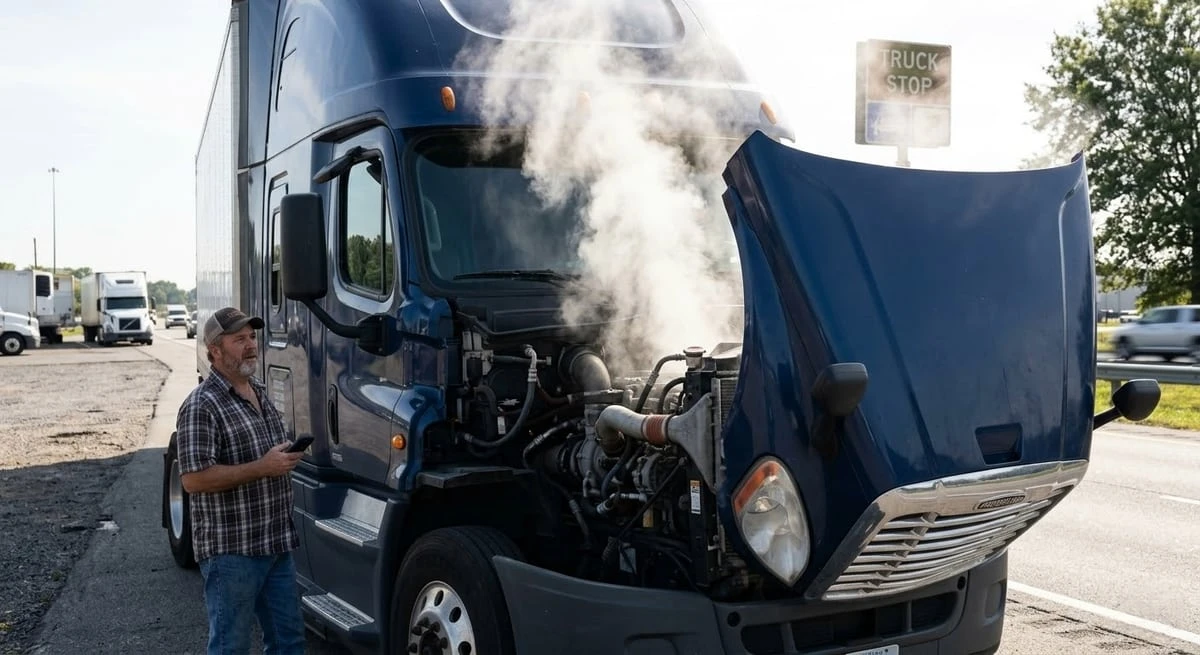
Short distances, yes — it won't strand you. But every heat cycle grows the crack, the engine over-fuels to compensate, and DPF regens multiply. On a vocational truck cycling boost all day, the collateral aftertreatment damage adds up much faster than on a highway truck. Fix it within the week, not the season.
Are Mack and Volvo charge air coolers interchangeable?
Sometimes. MP8 and Volvo D13 share architecture, and some cores physically interchange between Pinnacle/Anthem and VNL applications. But bracket positions, inlet orientation, and year-range changes make blind swaps risky. Match by part number or cross-reference — a "same engine family" assumption is how trucks end up on jack stands waiting for a second part.
Why does my Granite eat CACs faster than my highway trucks?
Duty cycle. Vocational work means hundreds of boost spikes per day flexing the end tanks, plus job-site debris and washing damage. It's normal for a Granite CAC to last half as long as the identical part in a Pinnacle. Switching to an all-aluminium aftermarket core removes the plastic fatigue failure entirely.
What boost pressure should a healthy MP8 show?
Roughly 90–130 kPa (13–19 psi) at steady highway cruise, rising to 150–195 kPa (22–28 psi) at full load on a grade. Manifold pressure consistently below ~80 kPa under heavy load points to a boost circuit leak — pressure-test the CAC and inspect the charge pipes before condemning the turbo.
Does a new CAC come with couplers and clamps?
Almost never — cores ship bare. Order a coupler kit with the CAC. On a truck with 500,000+ km the old heat-hardened couplers usually crack during removal anyway, and replacing them adds only minutes while the front end is already open.
Can a fouled Mack CAC be cleaned instead of replaced?
Only if it passes a pressure test with zero leaks. Degreasing the core (externally and internally with proper solvent flush) restores airflow on an oil-fouled but intact CAC for $130–$220 at a shop. But fix the oil source — usually the turbo seal — first, or the new cleanliness lasts one season.
Need a Mack Charge Air Cooler?
MP7, MP8 and E-Tech fitments for Anthem, Pinnacle and Granite. Same-day pickup in Vaughan (GTA) — Canada-wide shipping available.
True Truck Parts
Heavy Duty Cooling & A/C Specialists — GTA, Canada
Our team specializes in cooling and A/C parts for Class 8 semi trucks, serving fleet operators and owner-operators across the Greater Toronto Area and Canada. We stock OEM-fit parts for Freightliner, Kenworth, Peterbilt, Volvo, Mack, Hino, International and Western Star.