When your temperature gauge starts creeping past normal, you have a short window to act. On a loaded Class 8 diesel, the gap between "running warm" and "engine damage" is smaller than most drivers realize — and the causes are usually one of the same seven problems.
This guide covers every common cause of semi truck overheating, how to tell which one you're dealing with, and exactly what needs to be replaced or serviced. If your gauge is climbing right now, jump to the emergency steps first.
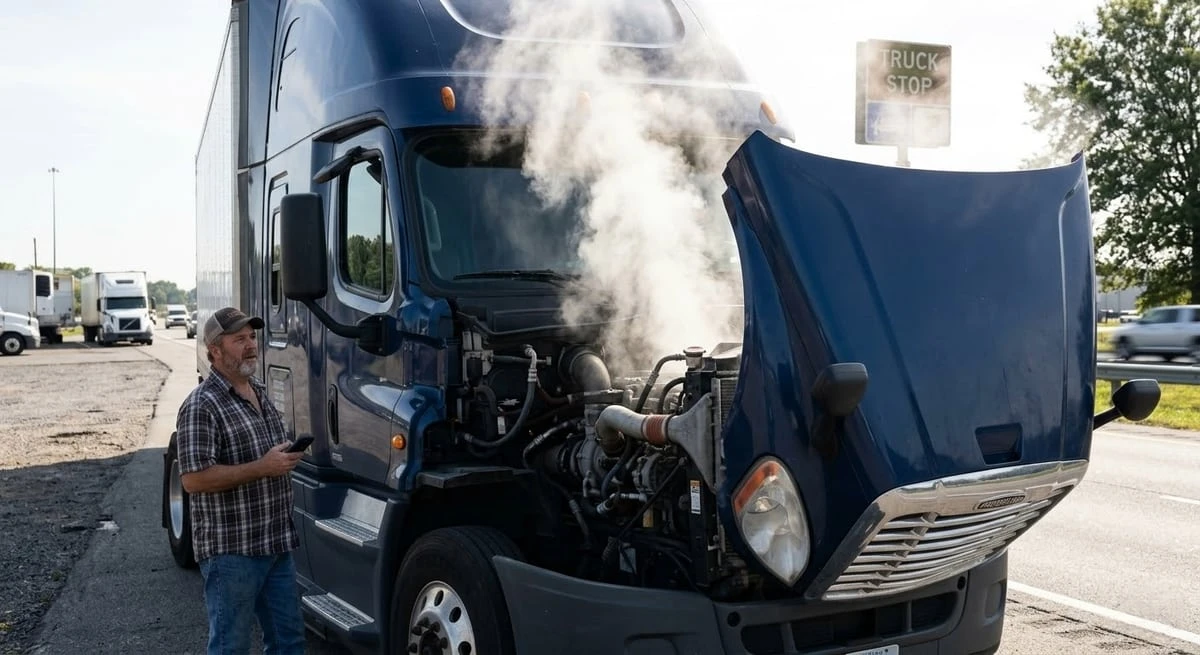
Steam from under the hood means the cooling system has already failed. At this point, turn off the engine immediately — do not let it idle.
New to how the cooling system works? Start with how a semi truck radiator works — then come back for this.
Driving a Cascadia? See Cascadia cooling system problems for the year-by-year radiator breakdown.
In this article
- What to Do Right Now If You're Overheating
- Cause 1: Low Coolant Level or Coolant Leak
- Cause 2: Failing or Blocked Radiator
- Cause 3: Clogged Charge Air Cooler
- Cause 4: Faulty Thermostat
- Cause 5: Water Pump Failure
- Cause 6: Degraded Coolant
- Cause 7: Blocked Airflow Through the Cooling Stack
- How to Diagnose the Root Cause
- Frequently Asked Questions
What to Do Right Now If You're Overheating
If your gauge is in the red or steam is visible: Pull over safely, turn the engine off immediately. Do not open the radiator cap — pressurized coolant can cause serious burns. Let the engine cool for at least 30 minutes before inspecting anything.
Once the engine is off and cooling:
- Check the coolant reservoir (overflow tank) — is it empty or low? If so, there's a leak somewhere in the system.
- Look underneath for coolant puddles — green, orange, or pink fluid on the ground points directly to a leak.
- Check the radiator cap area for residue — dried coolant crust around the cap indicates past overflow or a failing pressure cap.
- Do not add cold water to a hot engine — thermal shock can crack the block or head. Wait until the engine is fully cool before adding coolant.
- If no coolant leak is visible, the cause is likely internal — thermostat, water pump, or clogged radiator core. The truck needs a shop before it runs again.
1 Low Coolant Level or Coolant Leak
The most common cause of overheating — and the easiest to diagnose. Coolant is what carries heat away from the engine. If the level is low, there simply isn't enough fluid in the system to absorb and transfer the heat being generated.
How to Identify It
- Coolant reservoir is visibly low or empty
- Coolant puddle under the truck (especially after parking overnight)
- Dried coolant residue around hose connections, clamps, or the radiator cap
- White residue on the outside of the engine block (indicates internal coolant burning)
- Milky or foamy oil on the dipstick (coolant mixing with engine oil — serious)
Common Leak Sources
- Radiator — cracked end tanks, pinhole leaks in the core, or seam failures
- Coolant hoses — swollen, cracked, or loose clamps at the connection points
- Coolant reservoir/overflow tank — cracks in the plastic, especially in cold climates
- Water pump seal — weep hole dripping at the pump body
- Head gasket — internal leak; coolant enters combustion chambers (look for white exhaust smoke)
Important: Never just top off the coolant and keep driving without finding the source of the loss. The same low level will return, and the next overheating event may happen in a worse location or under heavier load.
2 Failing or Blocked Radiator
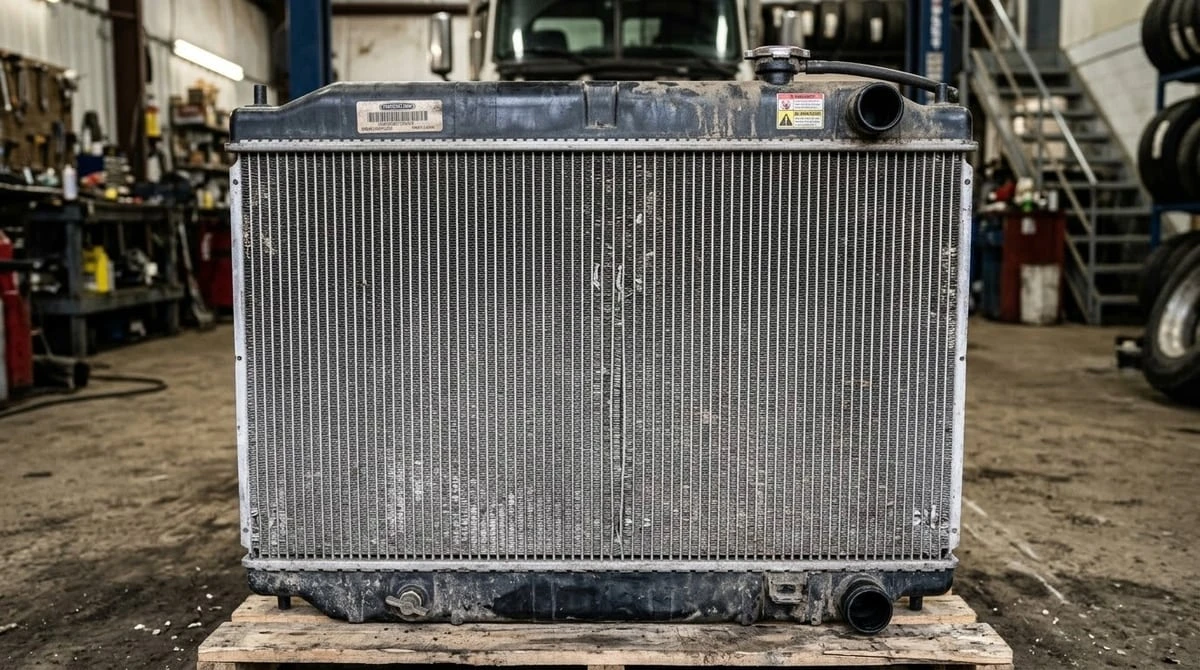
The radiator is the primary heat exchanger in the cooling system. Hot coolant from the engine flows through the radiator core, where airflow removes the heat before the cooled fluid returns to the engine. When the radiator fails — through internal tube blockage, external fin damage, or a structural leak — it can no longer shed heat fast enough.
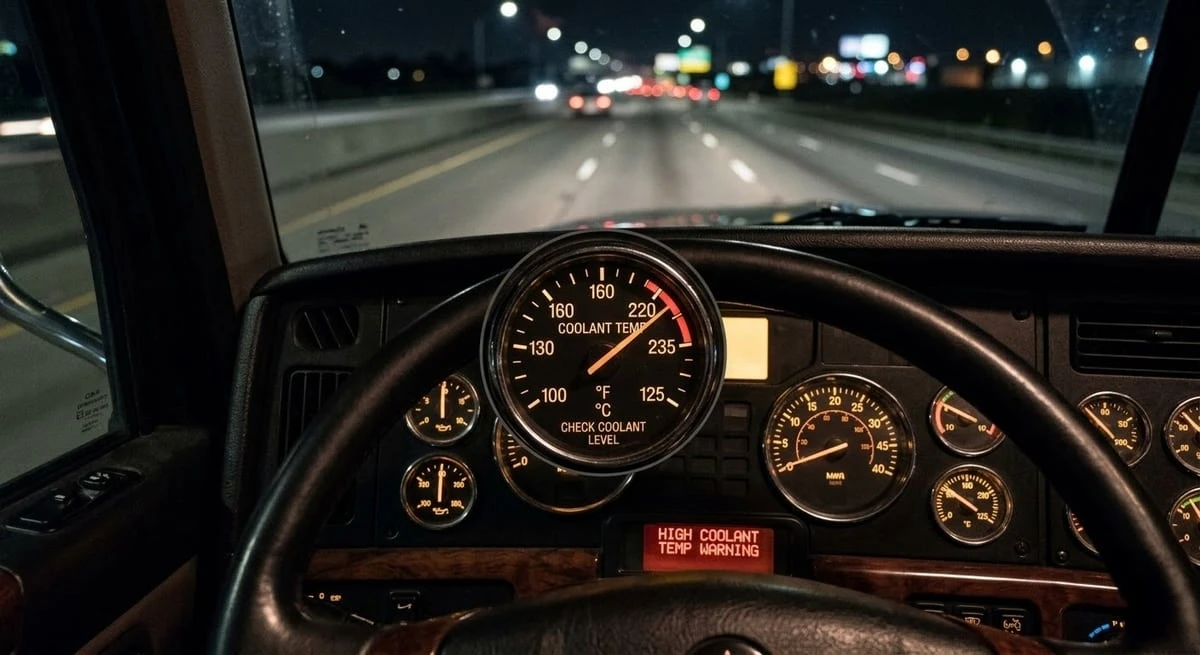
A temperature gauge creeping into the upper range is the first signal. The truck will not always throw a fault code at this stage — watch the gauge.
Signs of Radiator Failure
- Temperature climbs gradually over a long run, then stabilizes (partially blocked core)
- Overheating only at low speeds or in traffic — fine at highway speed (airflow is masking the problem)
- Visible coolant staining on the radiator face or end tanks
- Coolant that looks rusty or brown — scale buildup is blocking internal tubes
On high-mileage Freightliner Cascadias and Kenworth T680s, internal tube blockage from scale deposits is a primary cause of gradual overheating — there's no external leak, just steadily reduced flow through the core.
Need a replacement radiator?
OEM-spec radiators for Freightliner, Kenworth, Peterbilt, Volvo and Mack. Same-day quotes.
For a detailed breakdown of radiator warning signs, see our guide: 5 Signs Your Semi Truck Radiator Needs Replacing.
3 Clogged Charge Air Cooler
A charge air cooler (CAC) doesn't cool engine coolant — it cools the compressed intake air coming from the turbocharger. But a clogged or leaking CAC contributes directly to overheating in a way most drivers don't realize.
When the CAC can't cool intake air efficiently, hot dense air enters the cylinders. Combustion runs hotter, exhaust gas temperatures (EGTs) climb, and the extra heat flows back into the cooling system. A poorly performing CAC significantly increases the thermal load the radiator has to handle — pushing the whole cooling system closer to its limit.
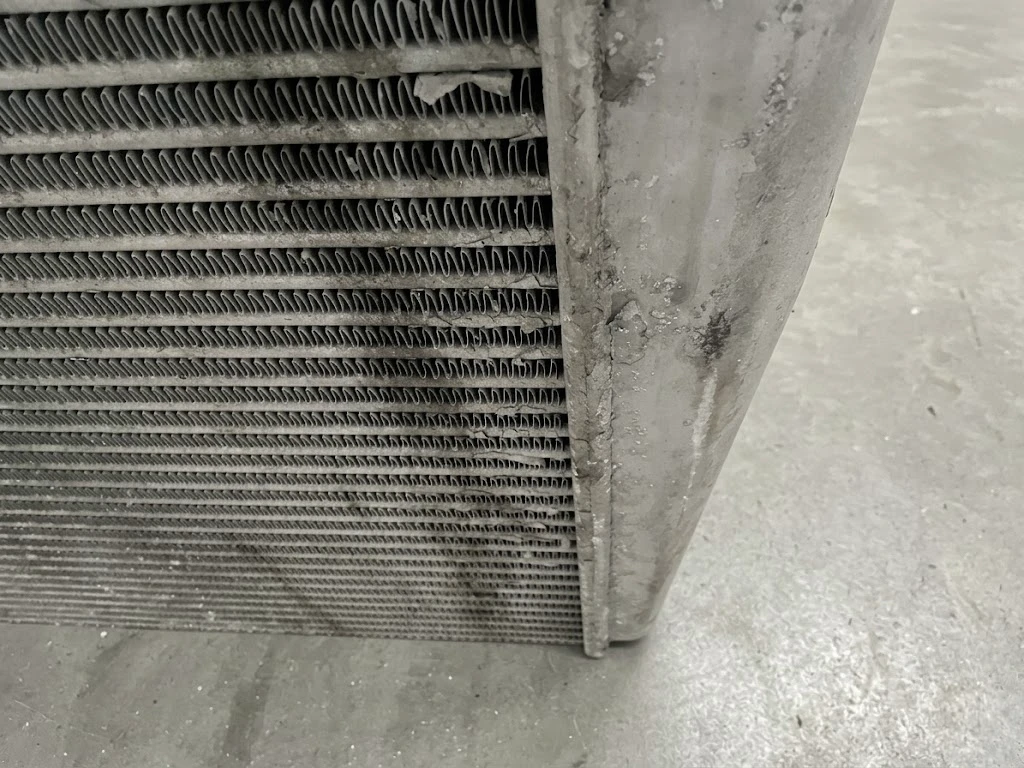
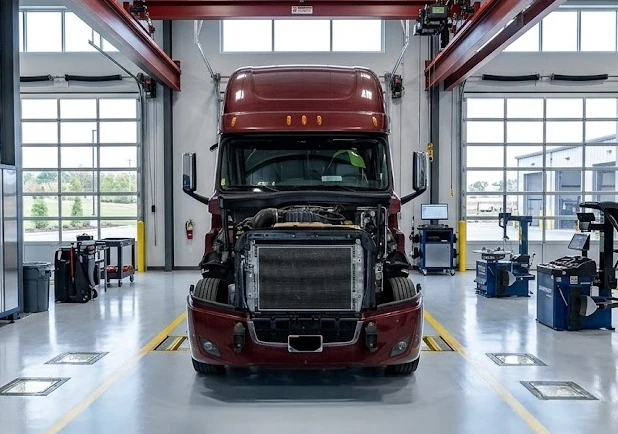
A clogged CAC is often missed when diagnosing overheating. It's mounted directly in front of the radiator — debris on the CAC also blocks airflow to the radiator behind it.
Signs the CAC Is Contributing to Overheating
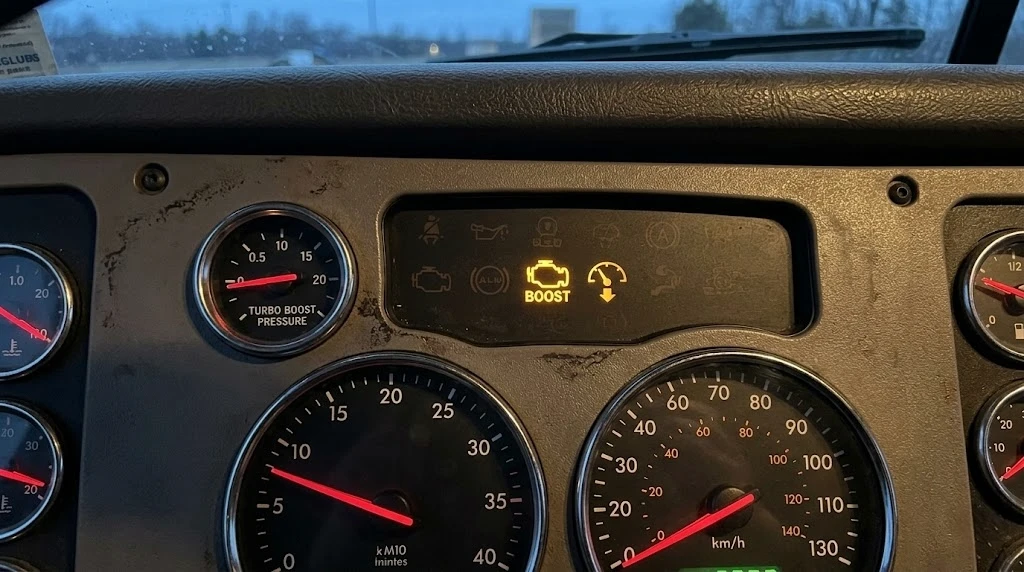
- Power loss alongside high temps — not overheating alone
- High EGT readings without a clear exhaust system fault
- Overheating under load but not at highway speed with light load
- Visible debris or oil coating on the CAC face blocking airflow
The CAC sits directly in front of the radiator. Even if the CAC itself is functioning, heavy debris on its face blocks airflow to the radiator behind it — treating both problems at once is the correct approach.
For the full CAC diagnosis guide including a step-by-step boost leak test, see: Semi Truck Charge Air Cooler: Symptoms, Diagnosis & Replacement Guide.
Need a replacement CAC?
OEM-spec charge air coolers for all major Class 8 makes. Same-day quotes.
4 Faulty Thermostat
The thermostat is a temperature-controlled valve that regulates coolant flow between the engine and the radiator. When the engine is cold, the thermostat stays closed, allowing the engine to reach operating temperature faster. Once the coolant reaches the correct temperature (typically 82–88°C / 180–190°F), the thermostat opens and sends hot coolant to the radiator to be cooled.
A thermostat stuck in the closed position is a direct path to severe overheating — coolant circulates within the engine but never reaches the radiator to shed heat. The engine temperature climbs rapidly with no relief.
How to Identify a Stuck Thermostat
- Rapid overheating from cold start — temperature climbs fast and doesn't stabilize
- Upper radiator hose stays cool when the engine is at operating temp (no hot coolant flowing to radiator)
- No heat from the cab heater at operating temperature — same root cause, coolant isn't circulating to the heater core
- Engine warms up too slowly — a thermostat stuck open won't cause overheating but causes poor fuel economy and DPF issues
The Quick Test
With the engine running and approaching operating temperature, carefully feel the upper radiator hose. If the engine temperature gauge is at or above normal and the upper hose is still cold to the touch, the thermostat is not opening and needs replacement.
Cost to fix: A thermostat replacement on a Class 8 truck is one of the lowest-cost cooling system repairs — typically under $100 in parts. Labour varies by make and accessibility, but it's generally a straightforward job.
5 Water Pump Failure
The water pump circulates coolant continuously through the entire cooling system — engine block, cylinder head, radiator, heater core, and back. Without it, coolant sits still and heat builds with nowhere to go. Even a partially failing water pump (reduced flow) causes gradual overheating under load.
Signs of a Failing Water Pump
- Coolant dripping from the weep hole at the bottom of the pump body — the bearing seal is failing
- Grinding or whining noise from the front of the engine — bearing wear
- Coolant in the engine oil — the pump seal has failed completely
- Overheating under load with no other obvious cause — reduced flow that only shows up when the engine demands maximum cooling
- Impeller erosion (found during pump removal) — cavitation from old or wrong coolant erodes the impeller, reducing flow without any external leak
Don't ignore the weep hole: A small drip from the weep hole is a warning sign, not an emergency — yet. It means the seal is beginning to fail. Left unaddressed, the seal fails completely, coolant enters the bearing, and the pump seizes. Replace it when you see the drip.
6 Degraded Coolant
Coolant doesn't just carry heat — its corrosion inhibitors protect every metal surface in the cooling system. As coolant ages, these inhibitors deplete. Without them, electrolytic corrosion attacks aluminum, cast iron, and steel internally — depositing rust scale and mineral buildup that clogs passages and reduces heat transfer efficiency.
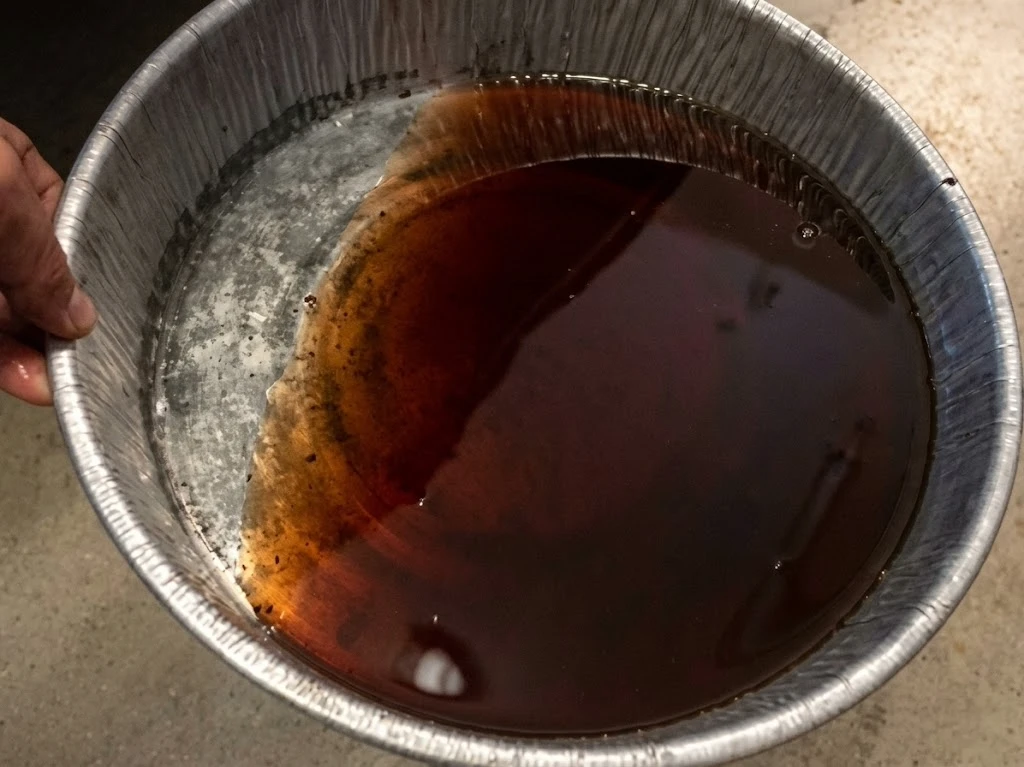
Brown or rusty coolant means the inhibitors are gone and internal corrosion is active. Scale deposits from degraded coolant restrict flow through radiator tubes and the engine block.
Coolant Service Intervals for Class 8 Trucks
- Conventional (green) coolant: Replace every 2 years / 240,000 km
- ELC / OAT (extended life, typically red or orange): Replace every 6 years / 960,000 km, or add SCA (supplemental coolant additive) at halfway point
- NOAT / HOAT (hybrid organic acid): Follow manufacturer intervals — typically 4–6 years
The biggest coolant mistake in Class 8 fleets: mixing types. Mixing conventional green coolant with ELC or OAT coolant deactivates the inhibitors in both. The result is a degraded mixture that looks fine in the reservoir but is actively corroding your cooling system.
For a full step-by-step guide to flushing and refilling the cooling system, see: How to Flush a Semi Truck Cooling System. Coolant discipline is also what decides how long the radiator itself survives — how long a semi truck radiator lasts covers expected service life and how to judge whether yours is near the end.
7 Blocked Airflow Through the Cooling Stack
The radiator and CAC need a continuous supply of cool outside air moving through the fins to function. Anything that blocks this airflow reduces cooling capacity — sometimes dramatically.
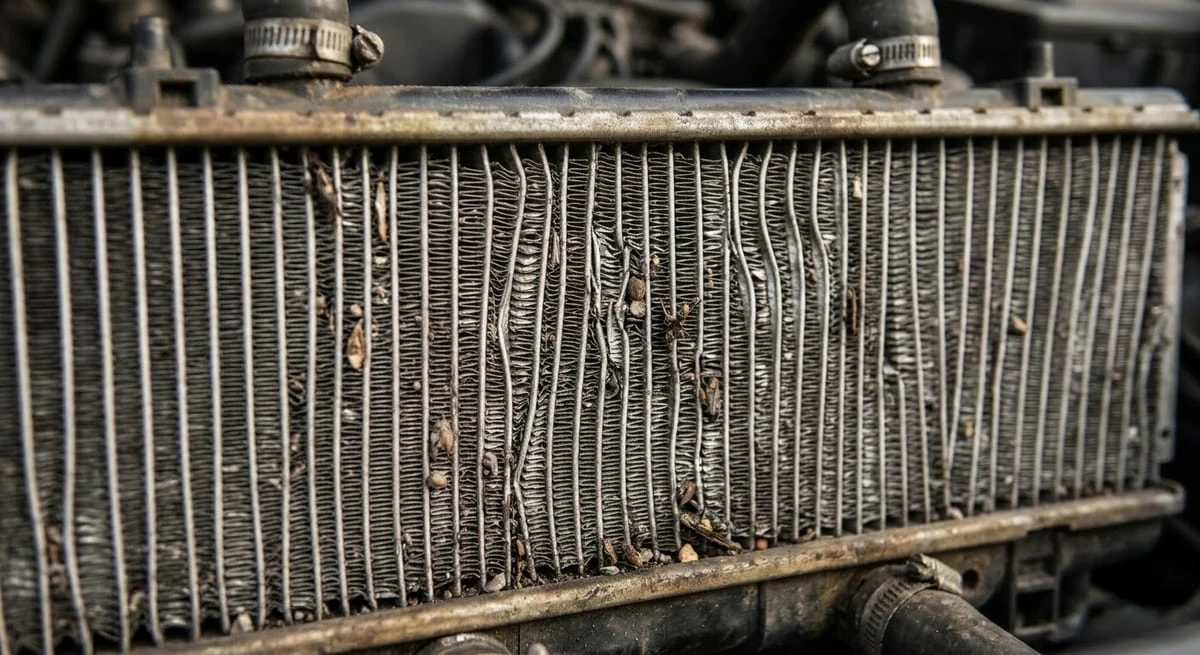
Debris-packed fins are a direct cause of overheating in summer and after running construction routes. Even 25–30% blockage across the face is measurable.
Common Sources of Blocked Airflow
- Bug and debris accumulation — common in summer months, especially on trucks running agricultural or highway routes
- Mud packing — construction site trucks and off-highway routes
- Bent or crushed fins — from road debris impact or improper pressure washing
- Cardboard or tarps over the grill — sometimes used in extreme cold to raise engine temp; left on by accident in warmer conditions
- Cooling fan clutch failure — the fan clutch controls fan engagement at low speed and in traffic; a failed clutch reduces airflow through the cooling stack when the truck is moving slowly
Quick test for fan clutch: At operating temperature in traffic or at idle, the cooling fan should be running at or near full speed. If you can easily spin the fan by hand when the engine is running at idle and warm, the fan clutch is not engaging properly.
How to Diagnose the Root Cause
More than one cause can contribute at the same time — a partially blocked radiator combined with degraded coolant and a marginal thermostat will produce overheating at higher loads than any single factor would alone. Work through this sequence:
- Check coolant level and condition first. Low level = leak somewhere. Brown or rusty colour = flush needed. Takes 2 minutes and rules out the two most common causes.
- Inspect the cooling stack face. Look at the CAC and radiator face from the front. Visible debris packing = clean before anything else.
- Check the upper radiator hose temperature at operating temp. Cold hose = thermostat stuck closed.
- Inspect the water pump weep hole. Dripping = bearing seal failing.
- Run a boost leak test on the CAC if power loss accompanies high temps.
- Check for internal radiator blockage with an infrared thermometer — scan across the radiator face; cold zones indicate blocked tube bundles.
If the coolant level is fine, the cooling stack is clean, the thermostat is opening, and the water pump is working — but the truck still runs hot under load — the radiator core likely needs replacement. At high mileage, internal scale and tube degradation reduce flow capacity without any visible external sign.
Frequently Asked Questions
Why is my semi truck overheating only at highway speed?
Overheating only at highway speed — when the truck is generating maximum heat — usually points to reduced cooling capacity rather than a total failure. Most common causes: partially blocked radiator core, degraded coolant with scale buildup, or a CAC that's clogged enough to raise EGTs. A failing water pump may also only show symptoms under high flow demand.
Why does my semi truck overheat in traffic but not on the highway?
The opposite pattern — fine at speed but overheating at low speeds or idle — is a classic sign of blocked airflow or a failing fan clutch. At highway speed, the ram air effect pushes enough air through the cooling stack regardless. At low speed, you depend entirely on the fan — if the fan clutch isn't engaging, airflow drops dramatically.
Can I keep driving if the temperature gauge is just slightly high?
Not recommended. A temperature gauge running in the upper range — not yet in the red — means the cooling system is marginal. It can cross into dangerous territory quickly under load, on grades, or in hot weather. Diagnose and fix the cause before the next serious run.
What's the first thing to check when a semi truck overheats?
Coolant level in the reservoir. It's the most common cause, takes 30 seconds to check, and tells you immediately whether there's a leak. After that, check the cooling stack face for debris and verify the thermostat is opening.
How long does it take for a semi truck engine to cool down after overheating?
At minimum 30–45 minutes with the engine off. Do not remove the radiator cap before the engine is fully cool — pressurized coolant exits violently and causes severe burns. If you need to add coolant before it's fully cool, use the reservoir (overflow) rather than opening the radiator cap directly.
Does a charge air cooler cause overheating?
Not directly — but a clogged or failing CAC increases thermal load on the entire cooling system by allowing higher-temperature intake air into the engine, raising EGTs and the amount of heat the radiator must shed. On a truck already marginal on cooling capacity, a degraded CAC can be the factor that pushes it over the edge.