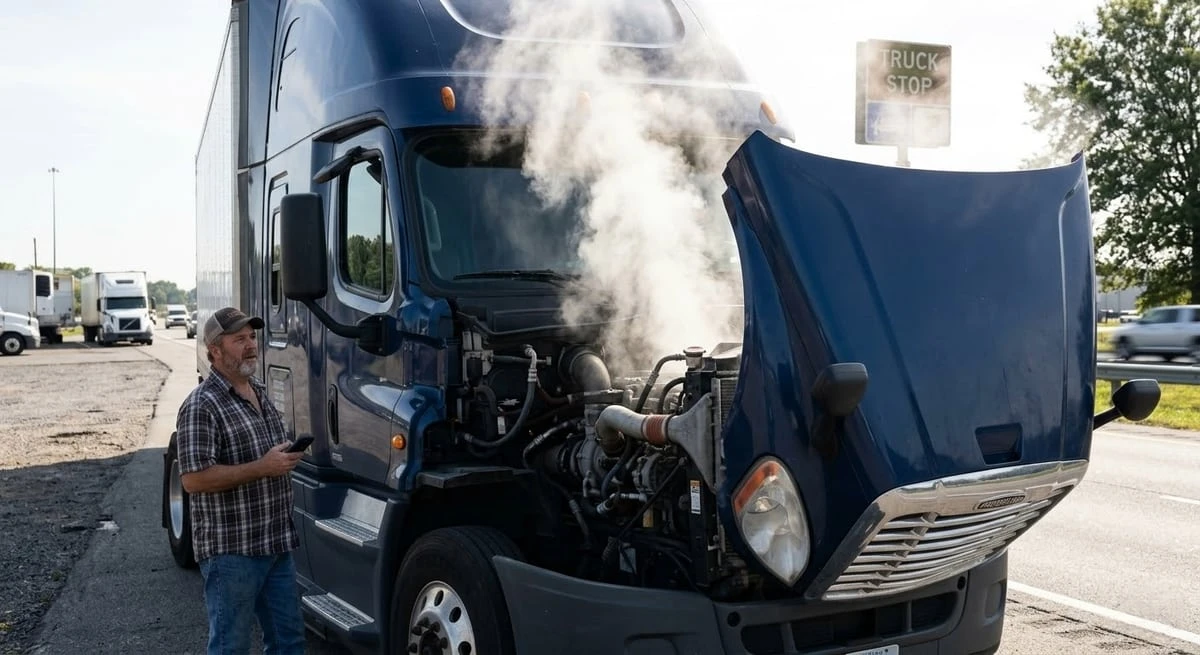
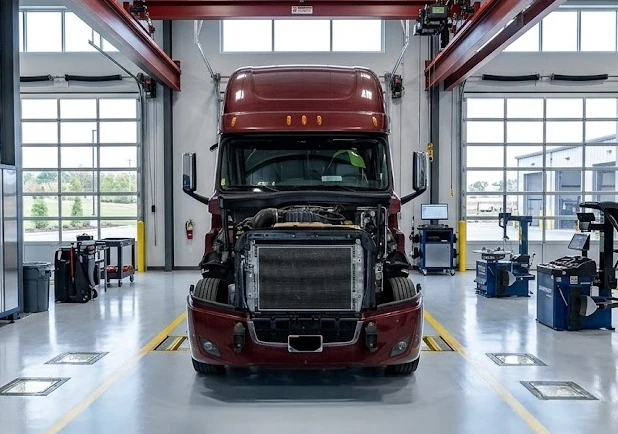
A semi truck radiator typically lasts 800,000 to 1,200,000 kilometres under normal operating conditions — roughly 5 to 8 years for a truck running 150,000 km per year. But that number can be cut in half by neglected coolant, road debris, or a hard-working construction fleet route.
This guide covers what determines radiator lifespan on Class 8 trucks, how it varies by make, the warning signs that replacement is overdue, and how to extend service life as long as possible.
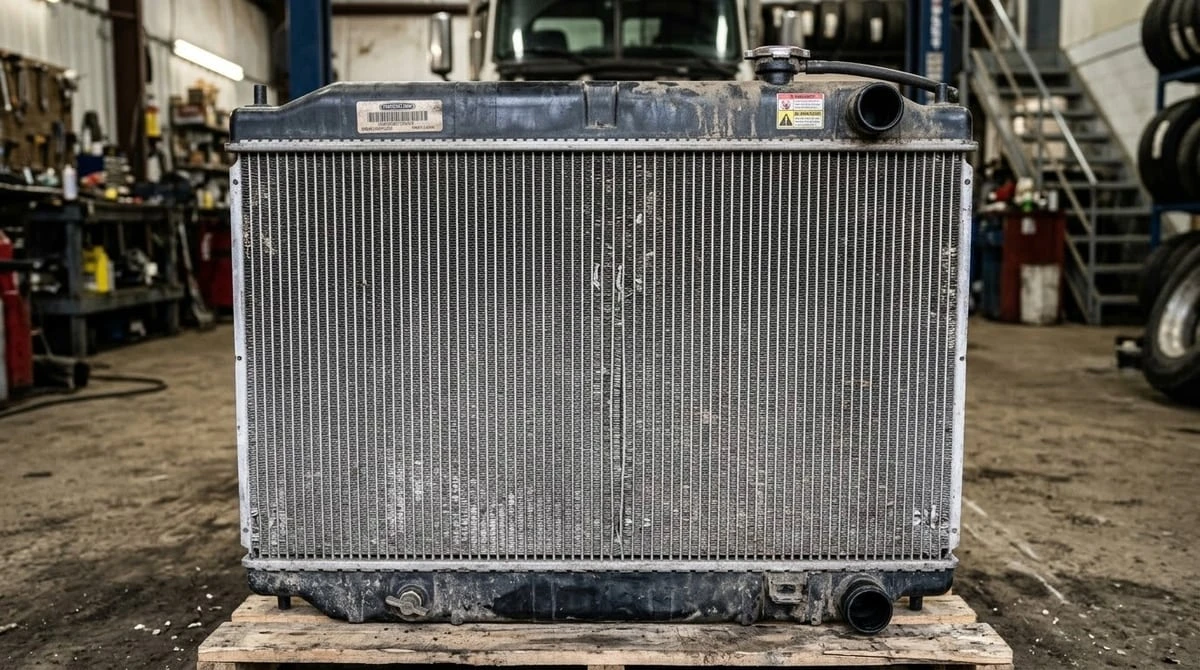
An OEM-spec semi truck radiator removed for inspection. Internal tube scale and end tank cracks are the two most common failure modes on high-mileage trucks.
New to how the cooling system works? Start with how a semi truck radiator works — then come back for this.
In this article
How Long Does a Semi Truck Radiator Last?
Under typical long-haul conditions — highway running, regular coolant service, clean air routes — a quality OEM-spec radiator on a Class 8 truck lasts 800,000 to 1,200,000 km. That's the honest range based on what we see come through for replacement at True Truck Parts across Freightliner, Kenworth, Peterbilt, Volvo, Mack, and Western Star trucks.
The wide range exists because radiator lifespan depends heavily on operating conditions and maintenance. A Freightliner Cascadia running consistent highway miles in a fleet with a disciplined coolant change schedule can hit 1.2M km without issue. The same truck doing construction site work on gravel routes, running degraded coolant, might need a radiator at 500,000 km.
Short answer: Plan for radiator replacement somewhere between 800,000–1,000,000 km on a well-maintained truck. If you're past that mileage and haven't replaced it yet, start watching closely for the warning signs below.
5 Factors That Shorten Radiator Lifespan
1 Neglected or Wrong Coolant
This is the single biggest cause of premature radiator failure. Coolant has two jobs: carry heat and protect metal from corrosion. The second job requires corrosion inhibitors — and those deplete over time.
When inhibitors run out, electrolytic corrosion attacks the aluminum end tanks and the copper or aluminum tubes inside the core. Scale deposits build up and block flow. A radiator running on degraded coolant ages at roughly twice the normal rate.
Mixing coolant types (green conventional with red/orange OAT or ELC) is equally destructive — it neutralizes the inhibitors in both fluids simultaneously. Never top off with a different type.
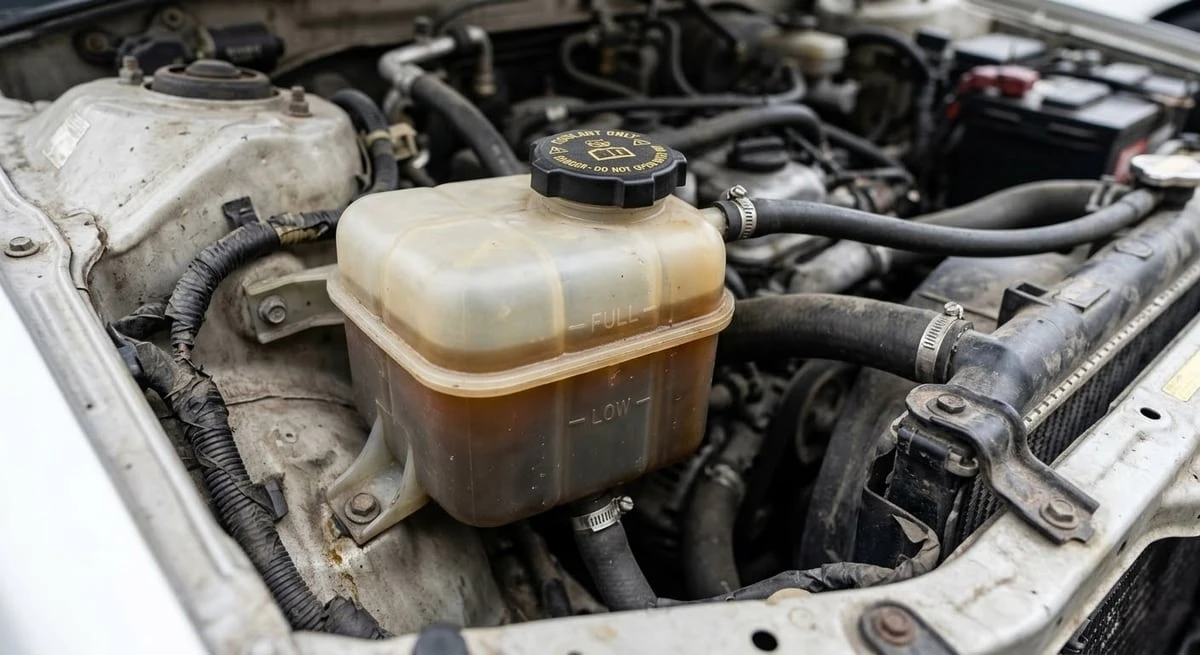
Healthy coolant is bright and translucent. Dark, brown, or rust-coloured fluid means the inhibitors are gone — corrosion is actively shortening radiator life.
2 Road Debris and Fin Damage
The radiator sits at the front of the cooling stack, directly behind the grille. Gravel, rocks, and road debris hit the fins at highway speed and bend or puncture them. Even partial fin damage reduces airflow through the core, forcing the remaining fins to work harder and run hotter.
Trucks running construction routes, resource roads, or regular gravel are especially vulnerable. Inspect the radiator face during every PM service — bent fins can be carefully straightened if caught early with a fin comb. Once a significant portion is damaged, replacement is more cost-effective.
3 Operating Temperature Extremes
Consistent high-load operation — mountainous routes, heavy overweight loads, summer heat in stop-and-go — keeps the cooling system at or near its thermal limit for extended periods. This accelerates metal fatigue at weld seams and end tank connections.
Cold climates add a different stress: freeze-thaw cycling on residual water in the system can crack end tanks if the coolant concentration drops below the freeze point. In Ontario winters, maintain at least 50% coolant concentration for protection to -37°C.
4 Deferred Maintenance
Small leaks and minor issues that get driven through instead of fixed accelerate damage rapidly. A slow seam leak that loses half a litre per week causes the system to run low on coolant and at elevated temperature — doubling the stress on the entire cooling stack with every kilometre.
5 Poor Water Quality in Coolant Mix
Tap water contains minerals — calcium, magnesium — that deposit scale on the inside of radiator tubes as the system heats and cools. Over time, scale buildup restricts flow through the tubes just as effectively as a physical blockage. Always use distilled or deionized water when mixing or topping off coolant.
Radiator Lifespan by Truck Make
Each major make has specific patterns we see repeatedly in the field:
| Make / Model | Typical Lifespan | Common Failure Point |
|---|---|---|
| Freightliner Cascadia (DD13/DD15) | 900,000–1,200,000 km | Internal tube scale past 600K km; fin damage on gravel routes |
| Kenworth T680 / T880 (PACCAR MX) | 800,000–1,100,000 km | End tank cracks at high mileage; plastic tank degradation |
| Peterbilt 579 / 389 (PACCAR / Cummins ISX) | 800,000–1,100,000 km | Lower mounting bracket corrosion on 389; fin damage on 579 |
| Volvo VNL (D13) | 850,000–1,150,000 km | Plastic end tank cracking — known issue at high mileage |
| Mack Anthem / Pinnacle (MP8) | 800,000–1,000,000 km | Seam leaks; bracket corrosion from road salt |
| Western Star 4900 / 5700 (Detroit / Cummins) | 750,000–1,000,000 km | End tank seam failures; core tube blockage on older units |
| International LT / HX (A26 / Cummins) | 800,000–1,050,000 km | Bracket and mounting corrosion; fin damage |
Need a replacement radiator?
OEM-spec radiators for all major Class 8 makes. Same-day quotes. GTA pickup and Canada-wide delivery.
6 Warning Signs It's Time to Replace
Mileage is a guide, not a rule. Watch for these signs regardless of where the odometer sits:
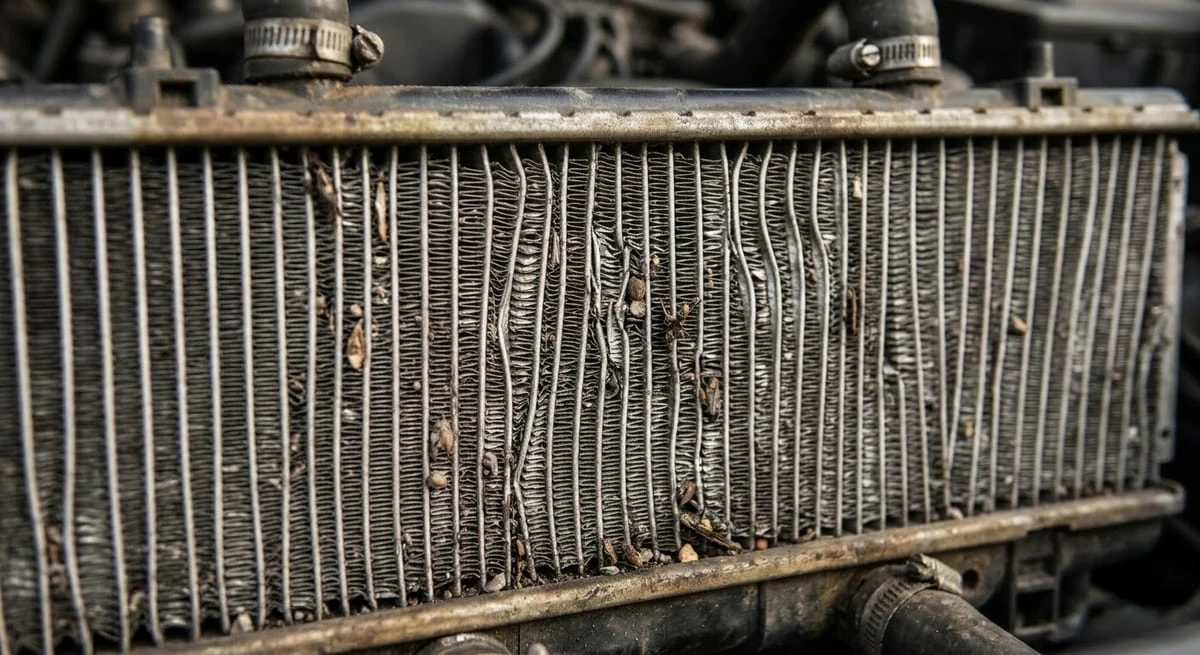
Fins crushed or packed across more than 30% of the face area means airflow is seriously compromised. At this point, replacement is more cost-effective than repair.
1. Temperature gauge consistently runs higher than normal
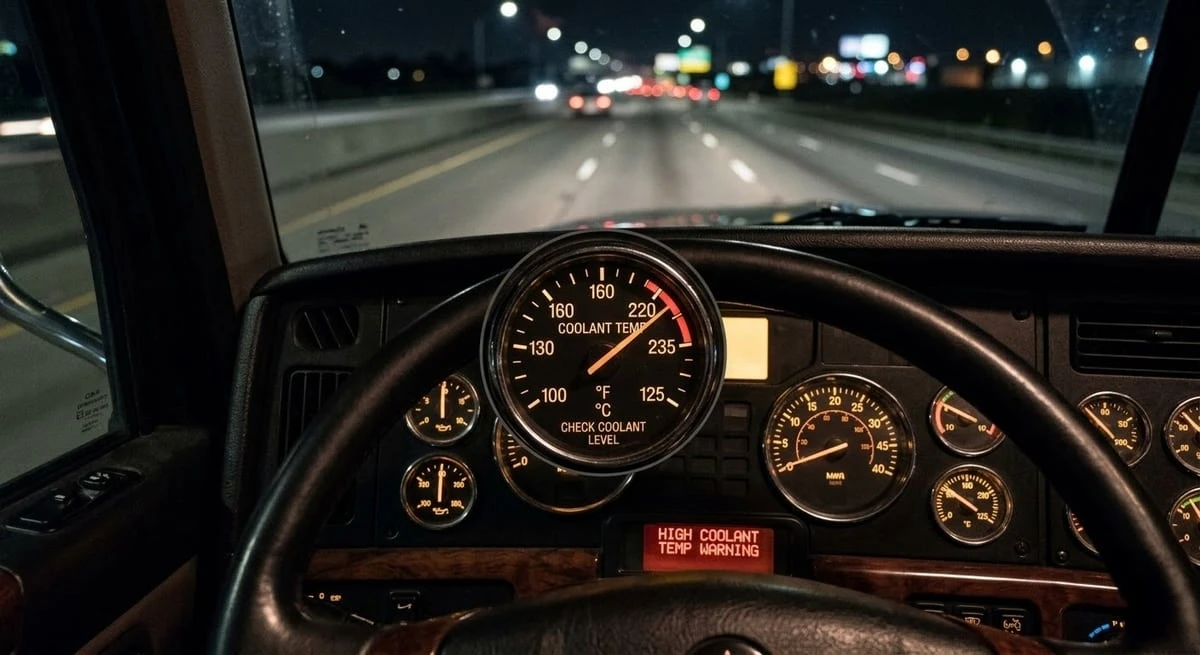
If your temperature gauge is sitting higher than it used to on the same routes and loads, the radiator is losing cooling capacity. This happens gradually as internal tubes scale up — there's no sudden failure, just a slow climb in operating temp.
2. You're adding coolant more often than before
A healthy cooling system is a closed loop. Needing to top off coolant between service intervals means it's going somewhere — external leak, internal leak (head gasket), or overflow from running hot. Coolant weeping from the radiator seams or core is a direct sign.
3. Visible coolant staining on the radiator body
White or green residue dried on the outside of the radiator — especially around the end tanks, seam welds, or drain fitting — confirms an active or past leak. Even a slow drip needs attention before it becomes a roadside failure.
4. Coolant looks rusty or brown
Discoloured coolant means the inhibitors are gone and internal corrosion is producing rust particles. At this point, a flush will clean up the fluid but won't undo the internal damage already done to the radiator tubes. Inspect for blockage.
5. Truck overheats only under load or in traffic
Fine at highway speed but climbing in temperature during heavy load or slow traffic? This is a classic partially-blocked radiator pattern — enough flow at low demand, not enough when the engine needs maximum cooling. See our full guide: Semi Truck Overheating: 7 Causes & How to Fix Each.
6. Physical damage to the core or end tanks
Visible cracks in the plastic end tanks, bent or punctured core tubes, or impact damage from road debris. Any crack in an end tank will worsen over time — plastic doesn't seal itself, and pressure cycling will open the crack further.
For a more detailed breakdown of each symptom, see: 5 Signs Your Semi Truck Radiator Needs Replacing.
Repair vs. Replace — When Does Repair Make Sense?
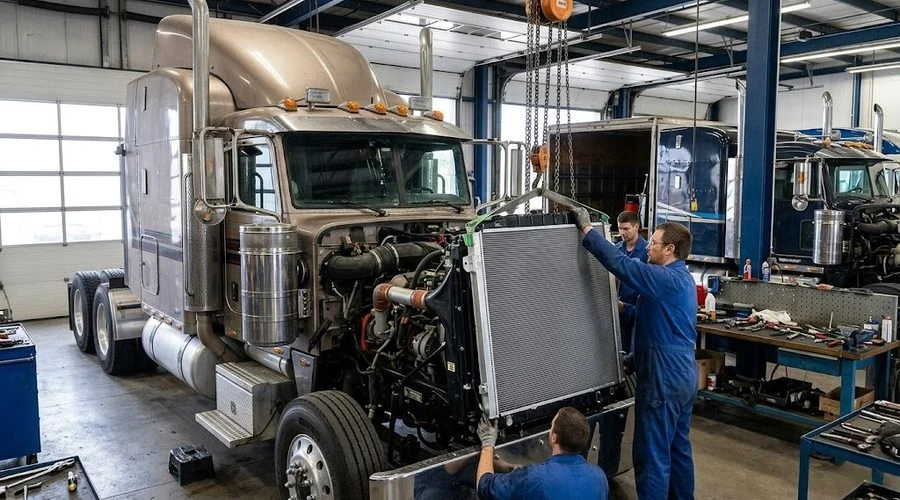
Radiator replacement on a Class 8 truck is typically a half-day shop job. Having the correct OEM-spec fitment on hand before the truck goes in minimizes downtime.
Repair makes sense when:
- The radiator is relatively low mileage and only has a single isolated leak at a fitting or pipe connection
- A small section of fins was bent by debris but the core is structurally intact
- The truck is an older model where a replacement radiator has a long lead time
Replace instead of repair when:
- The truck is past 800,000 km — a repaired radiator on an aging core will develop the next leak quickly
- The core has multiple leak points or widespread internal scale blockage
- An end tank is cracked — plastic tank repairs rarely hold under sustained pressure cycling
- The repair cost exceeds 50% of a replacement radiator cost
- Downtime cost is high — a new radiator eliminates risk of repeat failures in the near term
On repair quality: Radiator repair shops vary widely. A properly rodded-out and re-cored radiator from a reputable shop can extend life meaningfully. A quick weld patch on a cracked tank in a truck past 900,000 km is money poorly spent — budget for replacement instead.
How to Get Maximum Life from Your Radiator
These four maintenance practices have the highest impact on radiator longevity:
- Follow coolant change intervals without exception. ELC/OAT coolant every 6 years or 960,000 km; conventional green every 2 years. Use SCA (supplemental coolant additive) at the halfway point on ELC. Always use distilled water in the mix.
- Inspect and clean the cooling stack face at every PM service. Bug packing, mud, and debris are easily removed with a low-pressure wash when caught early. Neglected for a season, they pack hard and bent fins are much harder to recover.
- Fix small leaks immediately. A slow drip today is a roadside breakdown in 60,000 km. The coolant loss that goes unnoticed between services is silently running the system low and hot.
- Test coolant concentration twice a year. Before winter and before summer peak heat. A refractometer costs under $30 and takes 30 seconds. Concentration below 33% risks freeze damage; above 70% reduces cooling efficiency.
For the full procedure on flushing and refilling the cooling system correctly, see: How to Flush a Semi Truck Cooling System.
GTA pickup and Canada-wide delivery
OEM-spec radiators for Freightliner, Kenworth, Peterbilt, Volvo, Mack, Western Star and more. Same-day quotes.
Frequently Asked Questions
How long does a semi truck radiator last?
A semi truck radiator typically lasts 800,000 to 1,200,000 kilometres under normal operating conditions — about 5 to 8 years at 150,000 km/year. Trucks on construction routes, running degraded coolant, or operating in extreme conditions may need replacement sooner, closer to 500,000–700,000 km.
How long does it take to replace a radiator in a semi truck?
Radiator replacement on a Class 8 truck typically takes 4 to 8 hours of shop time, depending on the make and whether the charge air cooler and other front-end components need to be removed for access. Having the correct OEM-spec radiator on hand before the truck goes in eliminates ordering delays and keeps downtime to one day.
How do I know if my semi truck radiator needs replacing?
The key signs are: temperature gauge running higher than normal on familiar routes, needing to add coolant more often than before, visible coolant staining on the radiator body, overheating under load but not at highway speed, and coolant that looks brown or rusty. Past 800,000 km, any of these signs should be treated as confirmation that replacement is due.
Can a semi truck radiator be repaired instead of replaced?
Yes, in some cases — a single isolated leak at a fitting or a small section of fin damage on a lower-mileage radiator can be repaired cost-effectively. However, past 800,000 km or when multiple leak points are present, replacement is more economical and reliable than repeated repairs on an aging core.
What is the best radiator for a Freightliner Cascadia / Kenworth T680 / Peterbilt 579?
OEM-spec radiators manufactured to the same specifications as the original unit — matching core dimensions, tube count, fin density, and end tank material. Aftermarket radiators vary significantly in quality; specify OEM-equivalent fitment to avoid premature failure. We carry direct-fit radiators for all major Class 8 makes — see our radiator catalog or call for a same-day quote.
How much does a semi truck radiator cost in Canada?
OEM-spec semi truck radiators typically range from $800 to $2,500 CAD depending on the make, model, and core size. Labour for replacement adds 4–8 hours of shop time. Contact us for a current quote — we serve fleets and owner-operators across the GTA and ship Canada-wide.