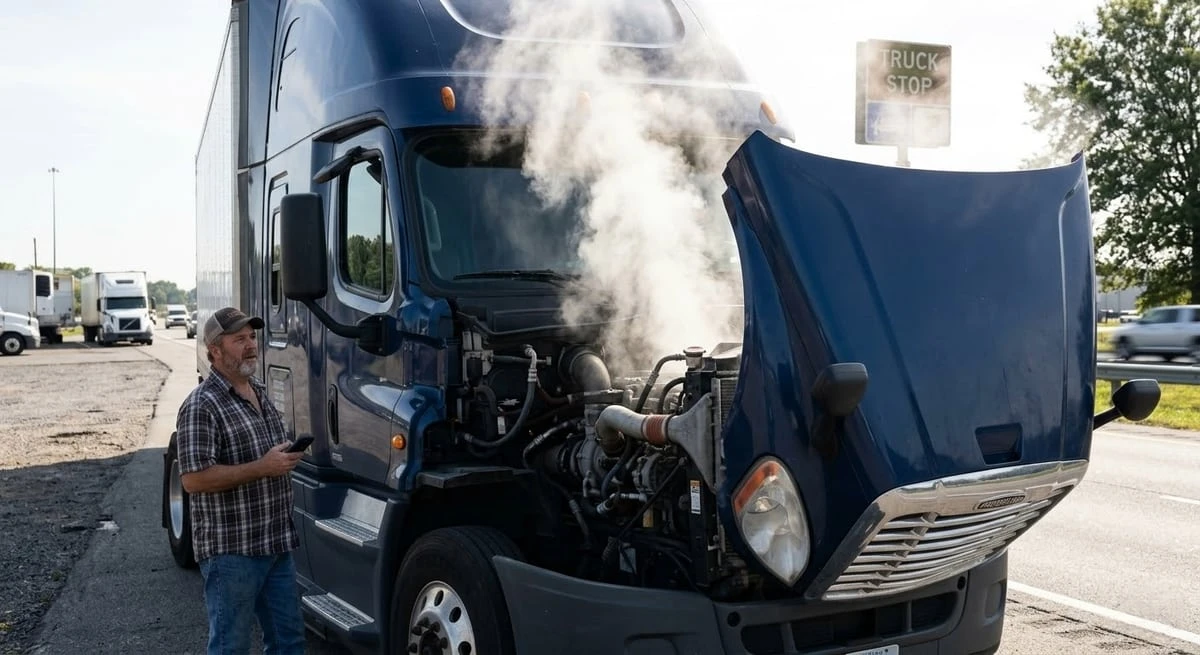
A cooling system flush is one of the highest-return maintenance jobs on a Class 8 truck. It takes a few hours, costs a fraction of a radiator replacement, and directly prevents the corrosion that destroys engines from the inside out.
Most fleets flush on a schedule. Owner-operators often skip it — until overheating shuts down a load and the repair bill arrives. This guide covers the full process: when to flush, what you need, step-by-step procedure, and the mistakes that cause more damage than doing nothing.
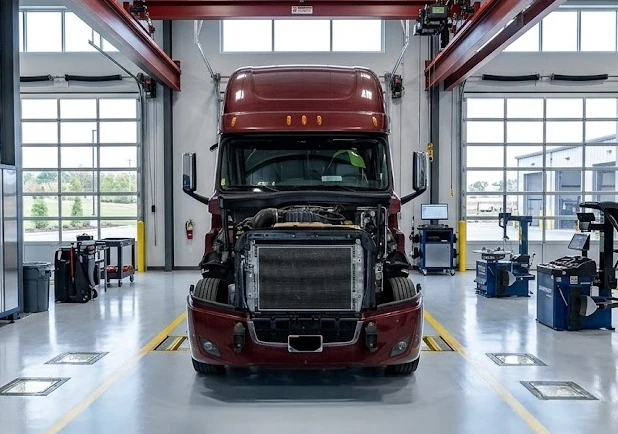
A healthy cooling system keeps engine temps in the 160–220°F range. A flush every 2–5 years maintains that performance and prevents internal corrosion.
New to how the cooling system works? Start with how a semi truck radiator works — then come back for this.
In this article
When Does a Semi Truck Need a Coolant Flush?
The service interval depends on your coolant type — but the calendar and your eyes are your best indicators:
- Extended Life Coolant (ELC / NOAT): every 4–5 years or 600,000–1,000,000 km, depending on SCA levels
- Conventional green coolant: every 2 years or 240,000 km
- OAT coolant: every 5 years or 800,000 km
Don't rely on kilometres alone. Also flush immediately if you see any of these:
- Coolant colour is dark brown, rusty, or cloudy
- Oily film on the inside of the radiator cap
- Engine running hotter than usual under normal load
- You've mixed coolant types (any mixing triggers an immediate flush)
- You bought a used truck with unknown service history
Quick test: Use a coolant test strip (available at any truck stop) to check SCA concentration and pH. Healthy coolant reads pH 8.5–10.5. Below 8 means the inhibitors are gone and corrosion is already happening.
Tools and Materials You Need
Gather everything before you start. You don't want to be mid-drain looking for a funnel.
Safety first: Never open the radiator cap on a hot or warm engine. The system runs at 15–20 psi. A pressurized cap release can spray scalding coolant instantly. Wait at least 2 hours after the last run — or until the upper radiator hose is cool to the touch.
Step-by-Step Flush Procedure
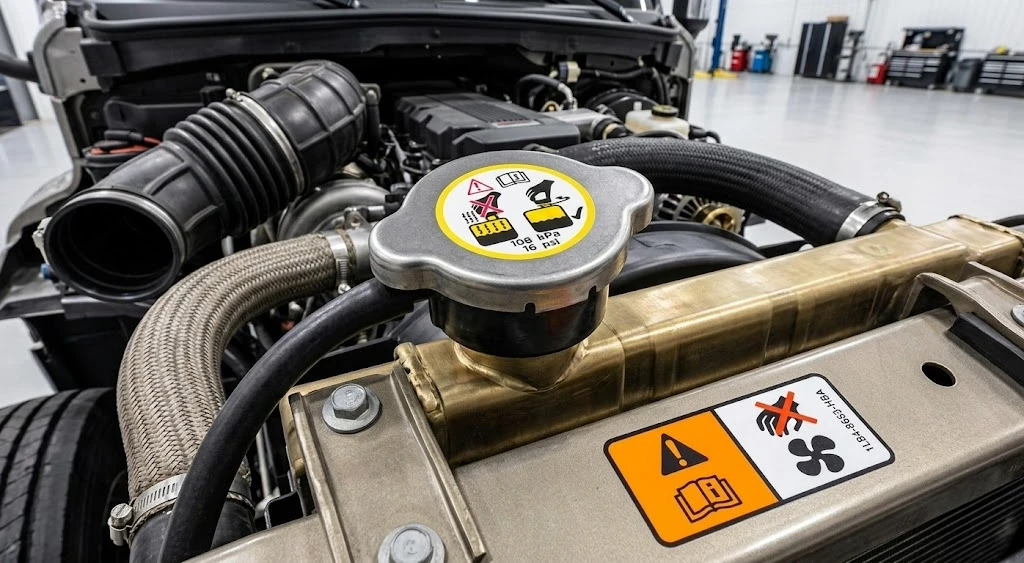
Only remove the radiator cap when the engine is fully cold. Twist to the first stop to release pressure, then remove completely.
1 Let the Engine Cool Completely
Park on level ground. Shut the engine off and wait a minimum of 2 hours. For a truck that ran all day, overnight is safer. Squeeze the upper radiator hose — if it's still firm and warm, the system is still pressurized. Don't rush this step.
2 Locate and Open the Drain
Most semi truck radiators have a petcock drain at the bottom or a lower drain plug. On Freightliner Cascadias, it's on the lower driver-side tank. On Kenworth T680s and Peterbilt 579s, check the lower radiator hose connection for a drain fitting. Place your drain pan and open the valve slowly — coolant flows fast on a full system.
Also drain the coolant reservoir tank — it holds old coolant too. On most trucks, the reservoir has its own drain or can be disconnected from the lower hose and drained into the pan.
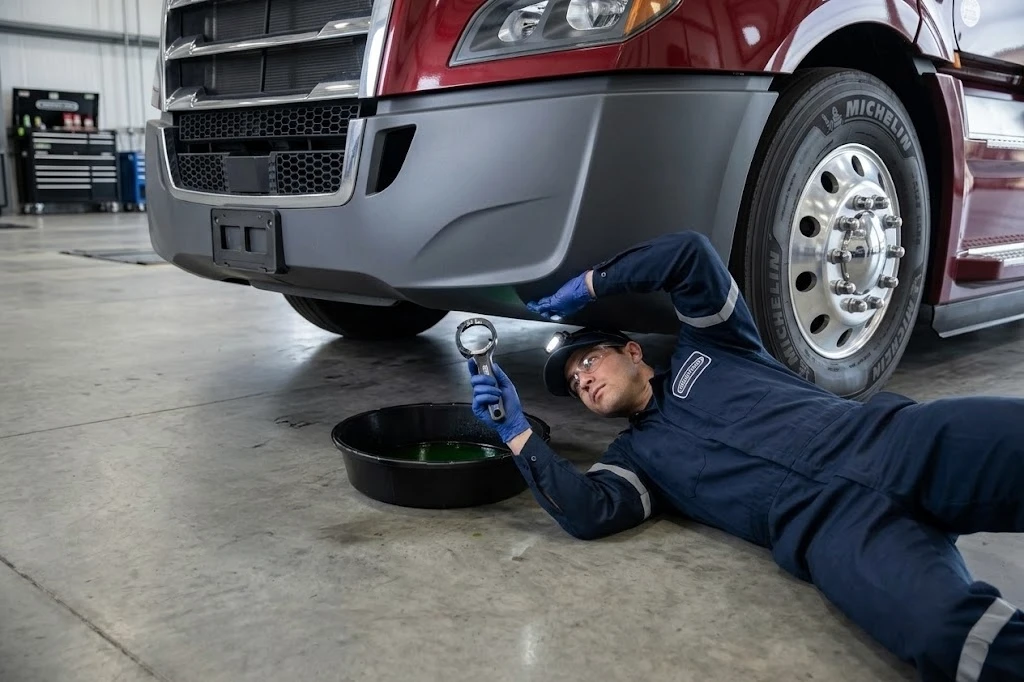
Open the petcock slowly. A full semi truck cooling system holds 20–40 litres — have a large drain pan ready.
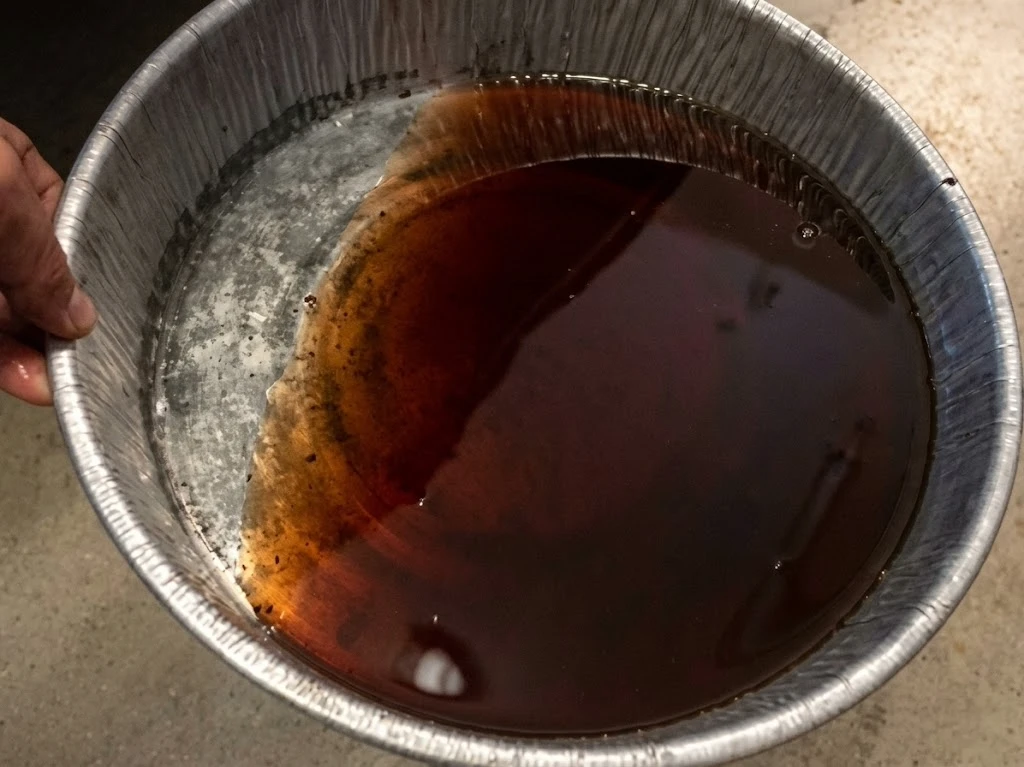
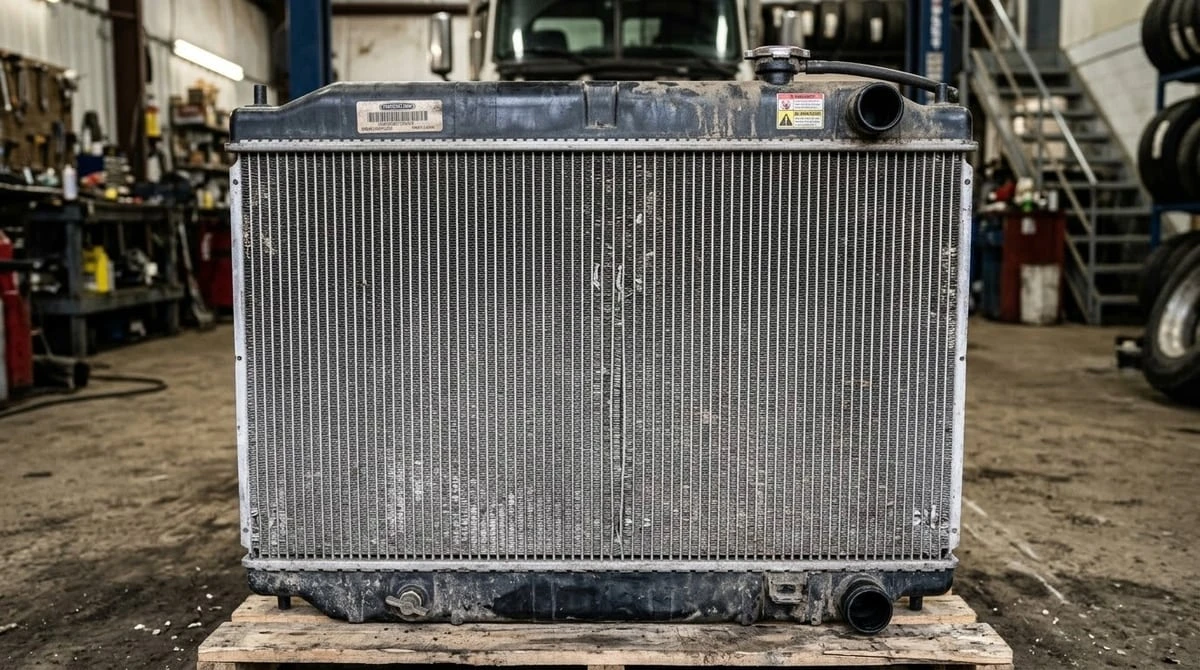
This is what neglected coolant looks like. The rust colour means inhibitors are depleted and corrosion is active inside the system.
3 Flush With Distilled Water
Close the drain. Fill the system with distilled water — not tap water. Tap water contains minerals that deposit on the radiator tubes and water pump impeller over time. Distilled water has no minerals to leave behind.
Start the engine and let it reach operating temperature (the thermostat will open, circulating water through the entire system). Run it for 10–15 minutes, then shut it off and let it cool again completely.
Drain the water. If it comes out brown or grey, repeat the flush with fresh distilled water until the drain runs clear. Heavily neglected systems may need two or three flush cycles.
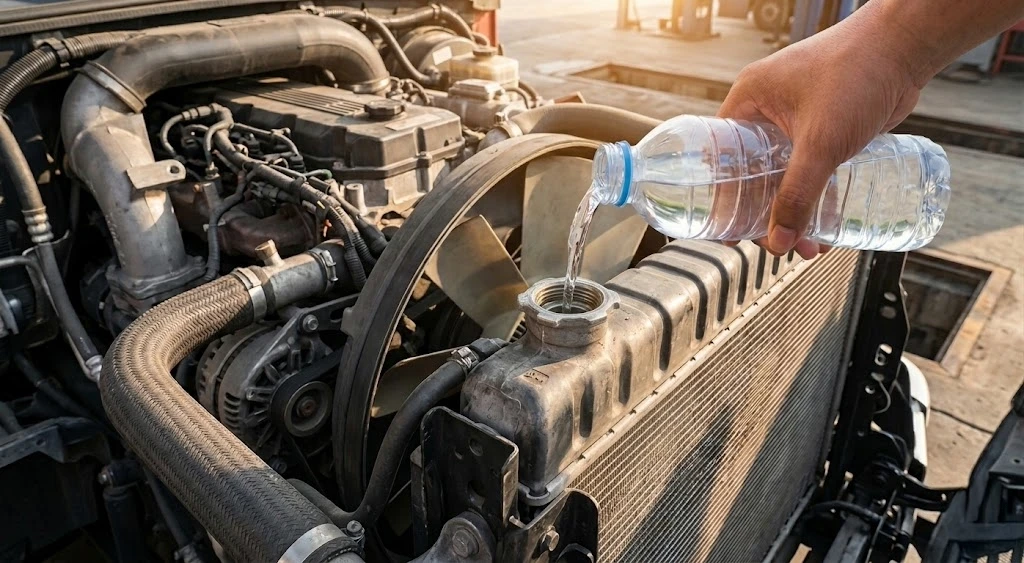
Always use distilled water for flushing — never tap water. Minerals in tap water leave scale deposits on the radiator tubes.
Need a new radiator or coolant tank?
OEM-fit parts for Freightliner, Kenworth, Peterbilt, Volvo and Mack.
4 Refill With Fresh Coolant
Close the drain plug or petcock and torque it to spec (over-tightening cracks plastic drain fittings). Fill the radiator slowly with premixed coolant — 50/50 premix is recommended over concentrate, which requires you to measure and dilute with distilled water.
Fill the radiator first, then the reservoir tank to the MAX line. Leave the radiator cap off initially.
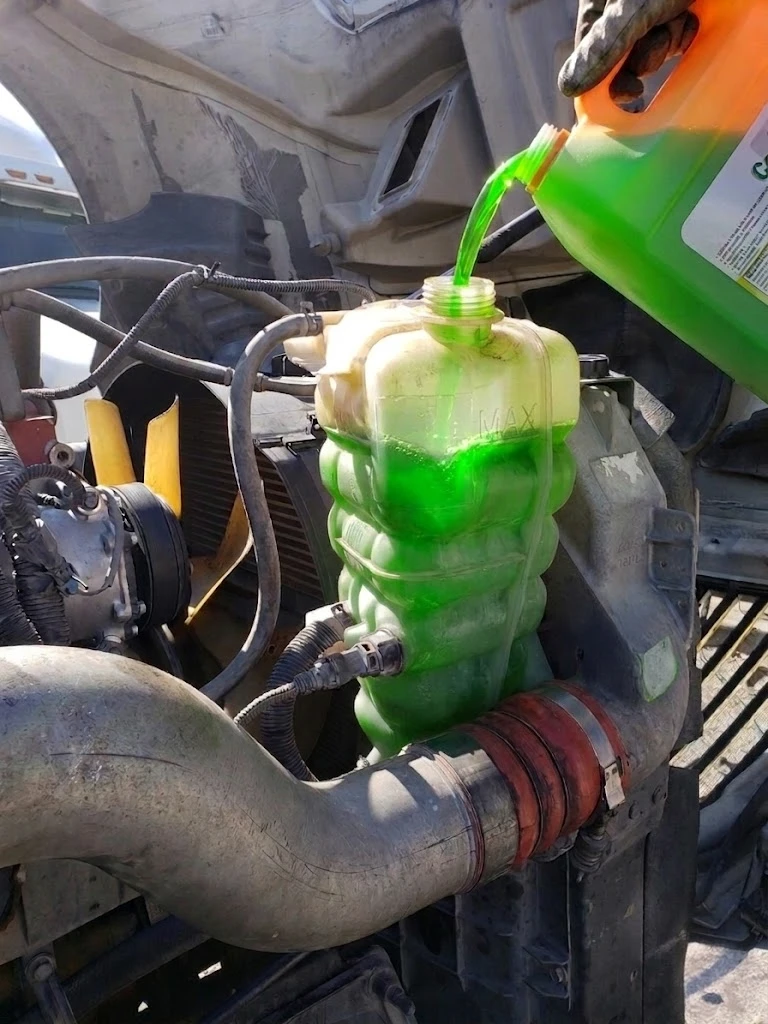
Use premixed 50/50 coolant that matches your OEM spec — orange ELC for most modern trucks. Don't mix types.
5 Bleed Air From the System
Air pockets in the cooling system cause hot spots and erratic temperature gauge readings. To bleed the system:
- Start the engine with the radiator cap off
- Let it idle and watch the coolant — you'll see air bubbles rising to the surface
- Squeeze the upper radiator hose several times to push air toward the radiator
- As the engine warms, the thermostat opens and coolant level may drop — top up as needed
- Once the temperature stabilizes and no more bubbles appear, install the cap
On trucks with a degas bottle (common on Volvo and Mack), the bottle serves as the bleed point — keep the cap loose until the thermostat opens, then tighten.
6 Check for Leaks and Verify Temperature
Run the engine to full operating temperature. Check all hose connections, the drain fitting, and the water pump area for drips. A pressure test (15 psi for 15 minutes) confirms there are no slow leaks before putting the truck back on the road.
Use a coolant test strip to verify SCA concentration and pH. Good readings confirm the flush worked and the new coolant is protecting the system.
Choosing the Right Coolant for Your Truck
Using the wrong coolant is one of the most common and costly mistakes in fleet maintenance. Here's a quick reference:
| Coolant Type | Colour | Interval | Common On |
|---|---|---|---|
| ELC / NOAT | Orange / Red | 4–5 years | Most modern Class 8 |
| OAT | Orange / Yellow | 5 years | Volvo, Mack |
| HOAT | Yellow / Gold | 5 years | International, Cummins |
| Conventional (IAT) | Green | 2 years | Older trucks |
Never mix coolant types. ELC and conventional green coolant are chemically incompatible. Mixing causes the inhibitors to neutralize each other, forming a gel that clogs the radiator and water pump passages. If mixing occurred, a complete flush is mandatory before adding any new coolant.
Check your OEM spec — it's in the owner's manual or on a sticker near the coolant fill cap. For Freightliner Cascadias with DD15 engines, Detroit Diesel specifies ELC meeting ASTM D6210. Kenworth and Peterbilt with PACCAR engines use NOAT. Volvo and Mack specify their own OAT formulas.
5 Mistakes That Damage the Cooling System
1. Using Tap Water
Municipal water contains calcium, magnesium, and other minerals. Over time, these deposit on the radiator tubes as scale — the same white buildup you see in a kettle. Scale reduces heat transfer and narrows flow passages. Always use distilled water, whether flushing or mixing concentrate.
2. Skipping the Coolant Reservoir
The coolant reservoir tank holds old coolant too. Drivers drain the radiator and fill it with fresh coolant — then the thermostat opens and pulls a litre of old brown coolant from the reservoir into the fresh system. Always drain and flush the reservoir separately.
3. Mixing Coolant Types
As covered above — this is the most damaging mistake in cooling system maintenance. If in doubt, drain and flush before adding anything new.
4. Over-Tightening Plastic Drain Fittings
Plastic petcocks are common on aluminum-core radiators. They need snug, not tight. Over-torquing cracks the plastic and creates a slow leak that's annoying to track down. Hand-tight plus a quarter turn is enough.
5. Not Bleeding Air After Refill
Air pockets cause the temperature gauge to spike erratically — drivers assume a problem with the thermostat or water pump and start replacing parts. Bleed properly after every refill and you avoid false alarms and unnecessary repairs.
Check your coolant tank while you're at it
Cracked or leaking reservoirs are the #1 cause of slow coolant loss.
Frequently Asked Questions
How often should you flush a semi truck cooling system?
Most heavy-duty diesel engines require a flush every 2–5 years depending on the coolant type. Extended Life Coolant (ELC/NOAT) lasts 4–5 years. Conventional green coolant lasts only 2 years. Check SCA concentration at every oil change to stay ahead of it.
What type of coolant do semi trucks use?
Most modern Class 8 trucks use Extended Life Coolant (ELC), also called NOAT. Volvo and Mack often use OAT. Older trucks may use conventional green (IAT). Always check the OEM spec before adding coolant — never guess.
Can I flush a semi truck cooling system myself?
Yes, with the right precautions. The most important rule: never open the radiator cap on a warm engine. Let it cool completely — at least 2 hours. The rest of the procedure is straightforward if you follow the steps above.
What happens if you don't flush the cooling system?
Old coolant loses its corrosion inhibitors and becomes acidic. This erodes the radiator from the inside, deposits scale on the water pump impeller, and can cause the thermostat to stick closed. Left long enough, you get radiator failure, overheating, and engine damage — a chain of repairs starting at $3,000 and going much higher.
How much coolant does a semi truck hold?
Most Class 8 trucks hold 20–40 litres (5–10 gallons) of coolant depending on the engine. A Freightliner Cascadia with a DD15 holds approximately 35 litres. A Kenworth T680 with PACCAR MX-13 holds around 30 litres. Check your OEM specs for the exact capacity.