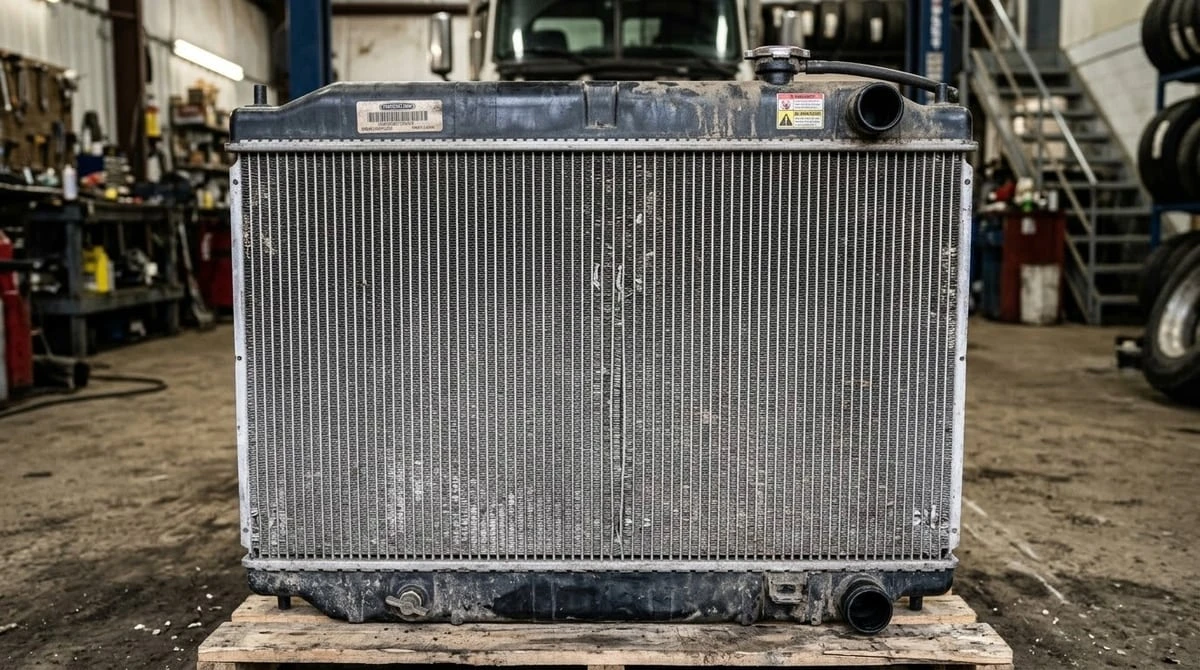
The charge air cooler is one of the most overlooked components on a Class 8 diesel truck — until it fails. A cracked seam or clogged core quietly robs you of power, raises fuel costs, and puts serious strain on the turbocharger. By the time most drivers notice something is wrong, the damage is already compounding.
This guide covers what a CAC does, how to recognize when it's failing, how to confirm it with a boost leak test, and what happens if you ignore it.
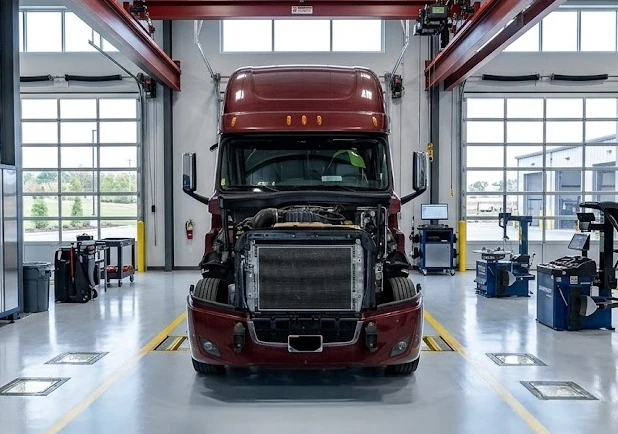
The CAC sits between the turbocharger and the intake manifold, typically mounted directly in front of the radiator. It cools compressed air before it enters the engine.
New to the term? Start with what a charge air cooler actually is — then come back for the symptoms.
In this article
What Is a Charge Air Cooler — and What Does It Do?
A charge air cooler — also called a CAC, intercooler, or air-to-air aftercooler (ATAAC) — is a heat exchanger that sits between the turbocharger outlet and the engine's intake manifold. Its job is simple: cool down the compressed air coming out of the turbo before it reaches the cylinders.
When the turbocharger compresses intake air, that air heats up significantly — often reaching 150–200°C at the turbo outlet. Hot air is less dense, which means fewer oxygen molecules per cubic centimetre. Less oxygen means less fuel can burn efficiently, which means less power and more soot.
The CAC drops that air temperature down to 40–60°C before it enters the engine. Cooler, denser air means more oxygen per cylinder — resulting in better combustion, more power, lower fuel consumption, and lower exhaust gas temperatures (EGT).
On a modern Class 8 truck — Freightliner Cascadia with DD15, Kenworth T680 with PACCAR MX-13, Peterbilt 579, Volvo VNL with D13 — the CAC is a critical part of the engine's breathing system. When it starts to fail, every other system downstream is affected.
6 Symptoms of a Failing Charge Air Cooler
1 Loss of Power and Sluggish Acceleration
This is the most common complaint. A leaking CAC reduces boost pressure reaching the intake manifold. The engine compensates by running richer (more fuel, less air) — but the power simply isn't there. Drivers notice it most on grades, at full load, or when merging at highway speed.
If your truck feels underpowered and the turbo sounds fine, a boost leak test on the CAC is the first thing to check before replacing anything expensive.
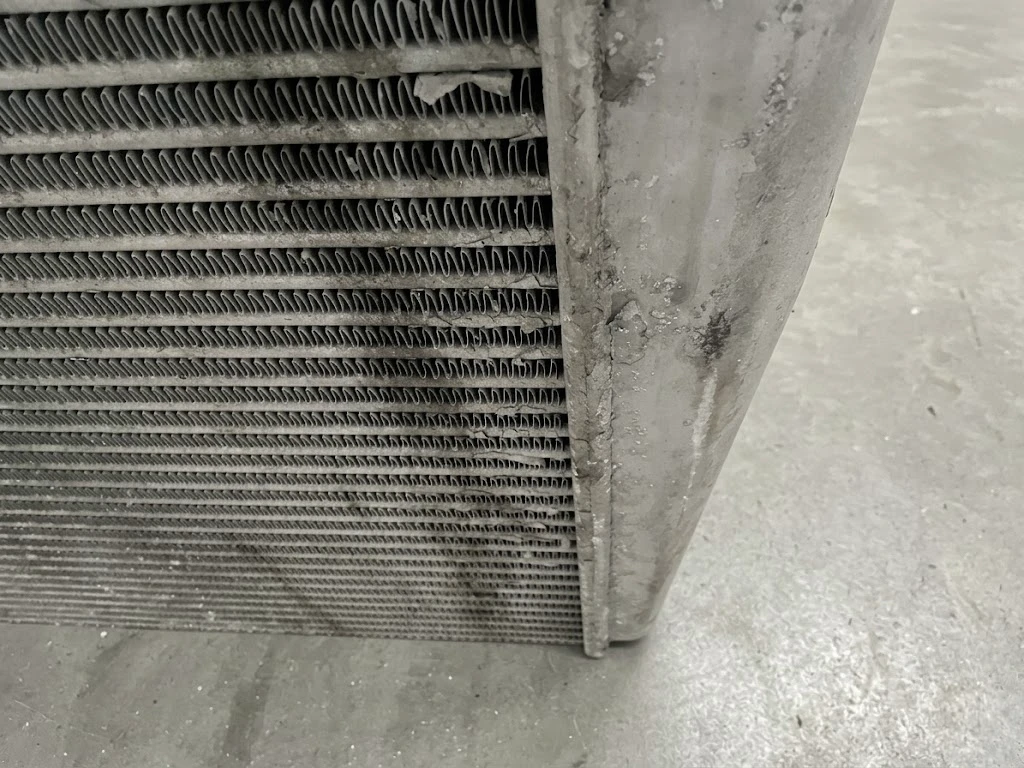
Oil residue and road debris clogging the CAC fins is a common cause of reduced cooling efficiency. Even 20% fin blockage causes measurable power loss.
2 Black or White Smoke From the Exhaust
Black smoke on acceleration points to incomplete combustion — the engine is getting too much fuel relative to available air. A leaking CAC reduces the air side of that equation. White smoke, particularly at startup, can indicate oil contamination in the intake system from a cracked CAC allowing oil blow-by from the turbo.
Neither should be ignored. Both are telling you the air/fuel ratio is off — and a boost leak is a leading cause.
3 High EGT (Exhaust Gas Temperature)
Exhaust gas temperature is one of the most reliable indicators of combustion efficiency. A healthy diesel engine keeps EGTs in a safe operating range. When the CAC fails and less cool air reaches the cylinders, combustion runs hotter — EGTs climb.
Sustained high EGTs accelerate wear on the exhaust manifold, turbocharger, DPF, and EGR system. If your pyrometer is consistently reading high under normal loads, start with the CAC.
High EGT readings and boost-related fault codes are early warning signs. Don't wait for the engine warning light — by then the problem has compounded.
4 Increased Fuel Consumption
When boost pressure drops, the ECM (engine control module) compensates by injecting more fuel to maintain power output. The result: worse fuel economy with no change in load or driving conditions. A 5–15% increase in fuel consumption on a route you've run for years is worth investigating. On a fleet of 20 trucks, that adds up to thousands of dollars per month.
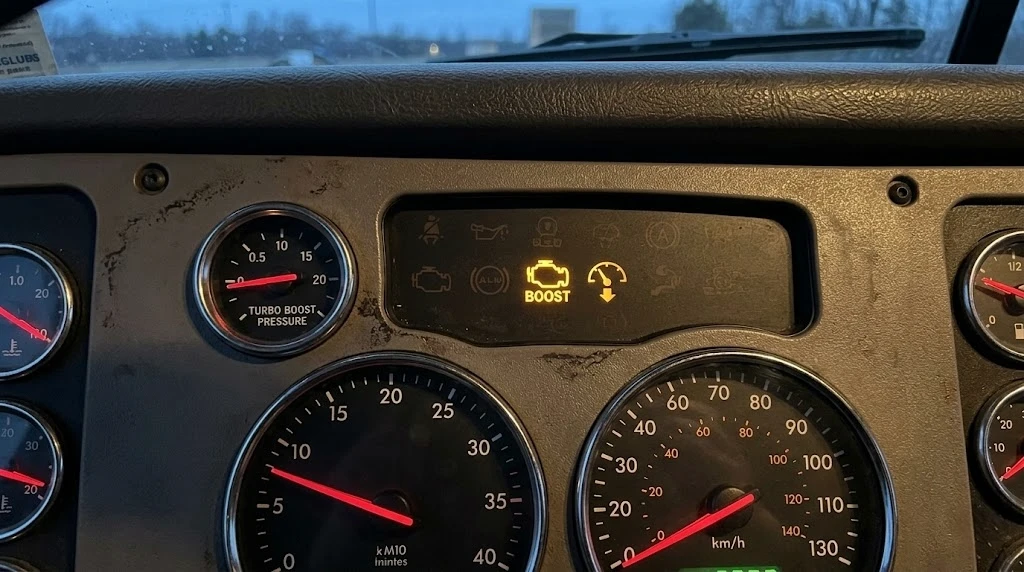
5 Engine Fault Codes (P0299, P0234)
Modern diesel engines monitor boost pressure continuously. Common fault codes related to CAC failure include:
- P0299 — Turbocharger/Supercharger Underboost Condition
- P0234 — Turbocharger/Supercharger Overboost Condition
- SPN 102 / FMI 1 — Intake Manifold Pressure low (Detroit/PACCAR)
These codes don't automatically mean the turbocharger is bad. A boost leak downstream of the turbo — including the CAC — will trigger the same codes. Always pressure-test the CAC before replacing the turbo.
6 Oil Mist in the Intake System
A small amount of oil vapour from the crankcase ventilation system is normal. But if you find heavy oil coating inside the intake piping or the CAC itself, that's a sign of excessive blow-by — often from a worn turbo seal — combined with a CAC that's allowing it to circulate. Oil-saturated CAC fins lose significant cooling efficiency.
Quick check: Remove the intake pipe at the CAC inlet and look inside with a flashlight. A light sheen of oil is normal. Heavy oil pooling or black sludge coating means the CAC needs cleaning or replacement, and the turbo seals need inspection.
How to Diagnose a Boost Leak — Step by Step
Suspecting a CAC leak based on symptoms is a starting point. Confirming it requires a boost leak test — the only reliable way to locate exactly where pressurized air is escaping the intake system.
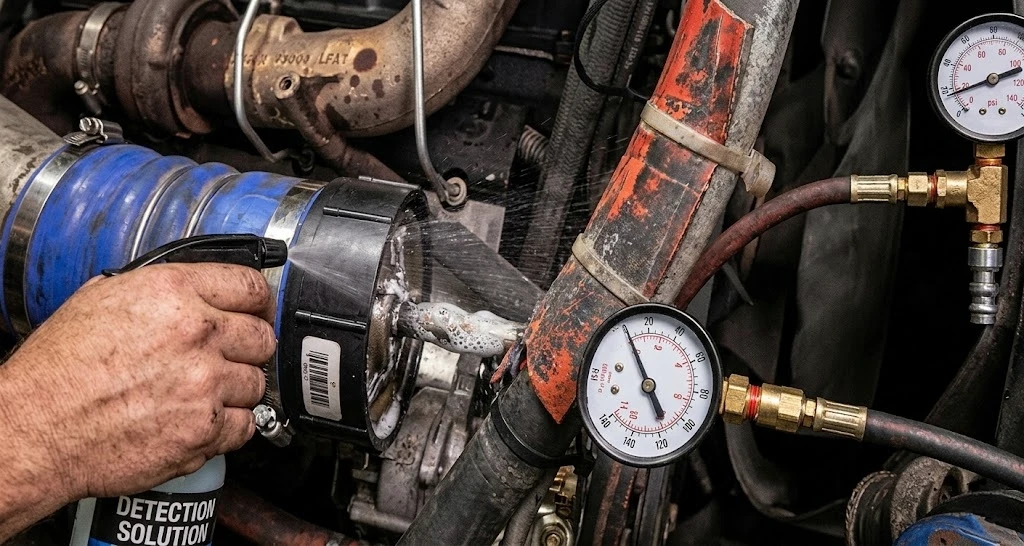
A boost leak tester pressurizes the intake system to 30 PSI with the engine off. Soapy water applied to all seams and connections reveals leaks instantly.
What You Need
- Boost leak tester kit (available at truck parts suppliers)
- Air compressor capable of 30 PSI
- Soapy water in a spray bottle
- Flashlight
Procedure
- Engine off and cold. Never pressurize a hot intake system.
- Disconnect the intake piping at the turbocharger outlet (before the CAC) and at the intake manifold (after the CAC). Cap the turbo outlet and the intake manifold port.
- Connect the boost leak tester to one of the charge air pipes. Pressurize the system to 30 PSI and hold.
- Monitor for pressure drop. If the system loses more than 2 PSI in 5 minutes, there is a leak.
- Spray soapy water on all CAC seams, end tanks, fins, and pipe connections. Bubbles pinpoint the exact leak location.
- Check all couplers and clamps on the charge air piping — loose clamps are a common source of boost leaks separate from the CAC itself.
Important: Do not exceed 35 PSI when testing. Excessive pressure can damage CAC end tanks and intake components. 30 PSI is sufficient to find any leak that matters under real operating conditions.
If the soapy water test shows bubbling along the CAC seams or through the core, the CAC needs replacement. Welding cracks in aluminum charge air coolers is not recommended — the thermal cycling of normal operation quickly re-opens repaired seams.
Need a replacement CAC?
OEM-spec charge air coolers for Freightliner, Kenworth, Peterbilt, Volvo and Mack. Same-day quotes.
When to Replace vs. When to Clean
Clean the CAC if:
- Fins are clogged with dirt or light oil residue but structurally intact
- No cracks, leaks, or deformed end tanks
- Boost leak test shows no pressure loss
- Symptoms are mild (slight power loss, slightly elevated EGT)
Cleaning method: compressed air from the engine side out, followed by low-pressure water wash. Let it dry completely before reinstalling.
Replace the CAC if:
- Boost leak test confirms a leak through the core or seams
- Visible cracks on the end tanks or seam welds
- Heavy oil saturation throughout the core (cleaning won't restore efficiency)
- Fins are severely bent or crushed — more than 30% of the face area
- The unit has been repaired before and is leaking again
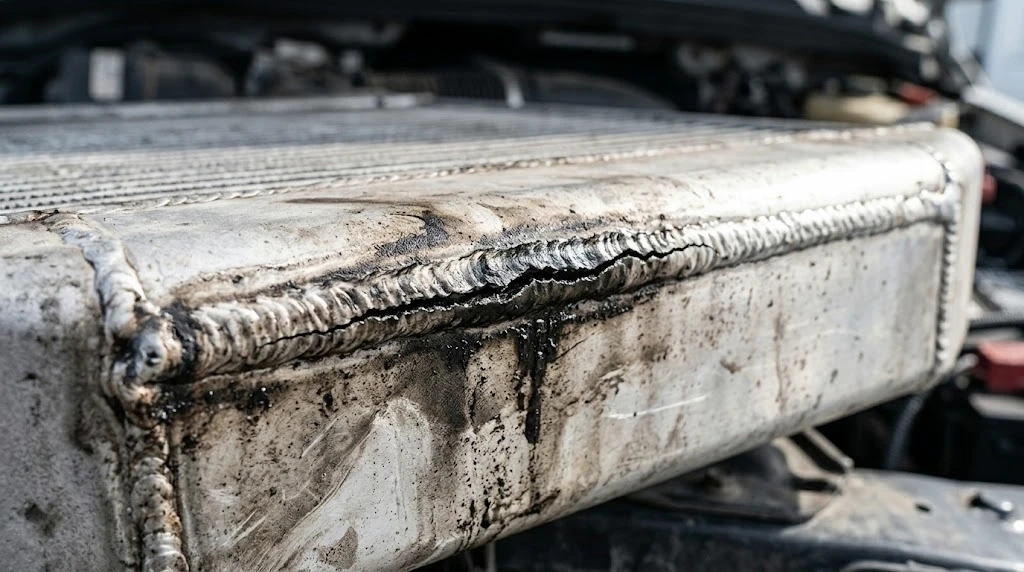
Cracked weld seams on the aluminum end tanks are the most common failure point. Soot and oil residue around the seam confirms an active boost leak.
CAC Issues by Truck Make
Freightliner Cascadia (DD13 / DD15)
The Cascadia's CAC is mounted directly in front of the radiator and is exposed to road debris and gravel impact. Fin damage from road debris is common, especially on trucks running construction routes or gravel roads. The charge air piping couplers — particularly the lower connection — are a known source of boost leaks separate from the CAC core itself. Check couplers first before condemning the CAC.
Kenworth T680 / T880 (PACCAR MX-13)
PACCAR MX-13-equipped trucks are known for CAC seam leaks at high mileage. The MX-13 runs higher boost pressures than older engines, which puts more stress on the end tank welds over time. Regular boost leak tests every 200,000 km are recommended on high-mileage T680s. SPN 102 FMI 1 (low intake manifold pressure) is the typical fault code.
View Kenworth T680 charge air cooler fitment guide →
Peterbilt 579 / 389 (PACCAR MX / Cummins ISX)
Same PACCAR MX considerations apply to Peterbilt 579s. On Peterbilt 389s with Cummins ISX engines, the CAC sits lower in the chassis and is more exposed to road spray and debris. ISX-powered trucks running in cold climates sometimes develop condensation freeze-thaw damage to the fins over winter.
View Peterbilt 579 charge air cooler fitment guide →
Volvo VNL (D13)
The D13 engine is generally reliable but Volvo VNLs are known for charge air pipe coupler failures before the CAC itself goes. The flexible boots connecting the CAC to the intake piping harden and crack with age. Inspect them at every CAC service — a $30 coupler replacement can prevent a misdiagnosed CAC replacement.
Mack Anthem / Pinnacle (MP8)
Mack MP8-powered trucks occasionally develop leaks at the CAC-to-pipe connection points. The MP8 runs a two-stage turbo on some configurations — ensure the correct CAC spec is used at replacement, as the two-stage and single-stage units are not interchangeable.
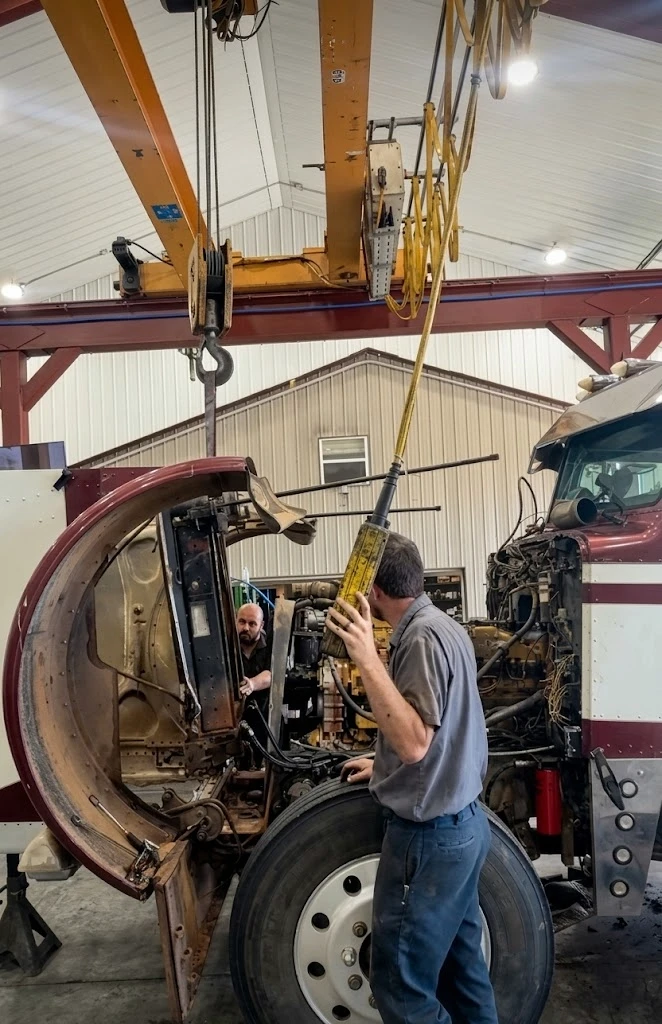
CAC replacement is straightforward with the right tools. Always perform a boost leak test after installation before returning the truck to service.
GTA delivery on all CAC orders
Mississauga, Brampton, Vaughan, Milton, Oakville, Burlington — same-day quotes Canada-wide.
Frequently Asked Questions
What does a charge air cooler do on a semi truck?
A CAC cools the compressed air from the turbocharger before it enters the engine. Cooler air is denser — more oxygen per cylinder means better combustion, more power, lower fuel consumption, and reduced EGTs.
What are the symptoms of a bad charge air cooler?
Power loss, black or white exhaust smoke, high EGTs, increased fuel consumption, and boost-related fault codes (P0299, SPN 102). A boost leak test confirms whether the CAC is the source.
How do you test a CAC for leaks?
Disconnect the charge air piping, plug both ends, pressurize to 30 PSI with a boost leak tester, and spray soapy water on all seams and connections. Bubbles reveal the exact leak location.
Can you drive with a leaking CAC?
Not recommended. A leaking CAC causes high EGTs that damage the turbo, exhaust manifold, and DPF. It also allows unfiltered air into the intake, accelerating injector and cylinder wear. Replace it as soon as possible.
How long does a semi truck CAC last?
800,000 to 1,200,000 km on a well-maintained truck. Trucks in heavy construction or gravel environments may see failures earlier due to fin damage from debris impact.