In this article
What A/C Lines Actually Do
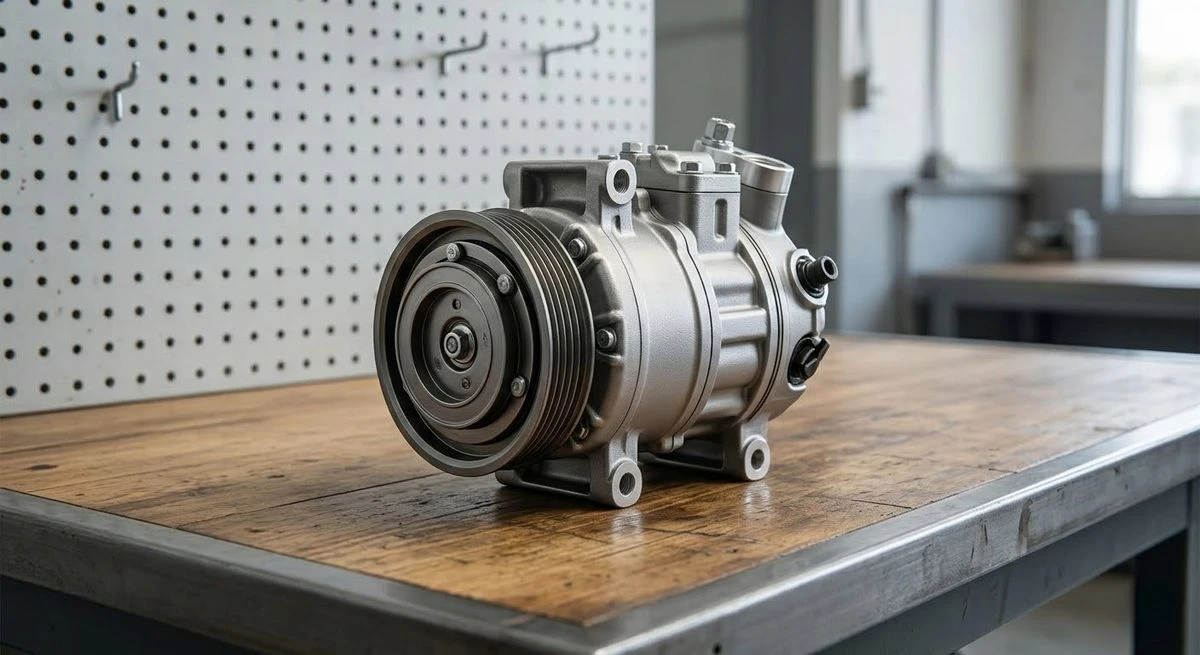
A semi truck A/C system is a closed refrigerant loop. The compressor pressurizes refrigerant gas and pushes it through a series of metal tubes and rubber hoses to the condenser (where heat is rejected), then through the expansion valve to the evaporator core (where the cab is cooled), and back to the compressor. The A/C lines are the plumbing that makes this circuit possible.
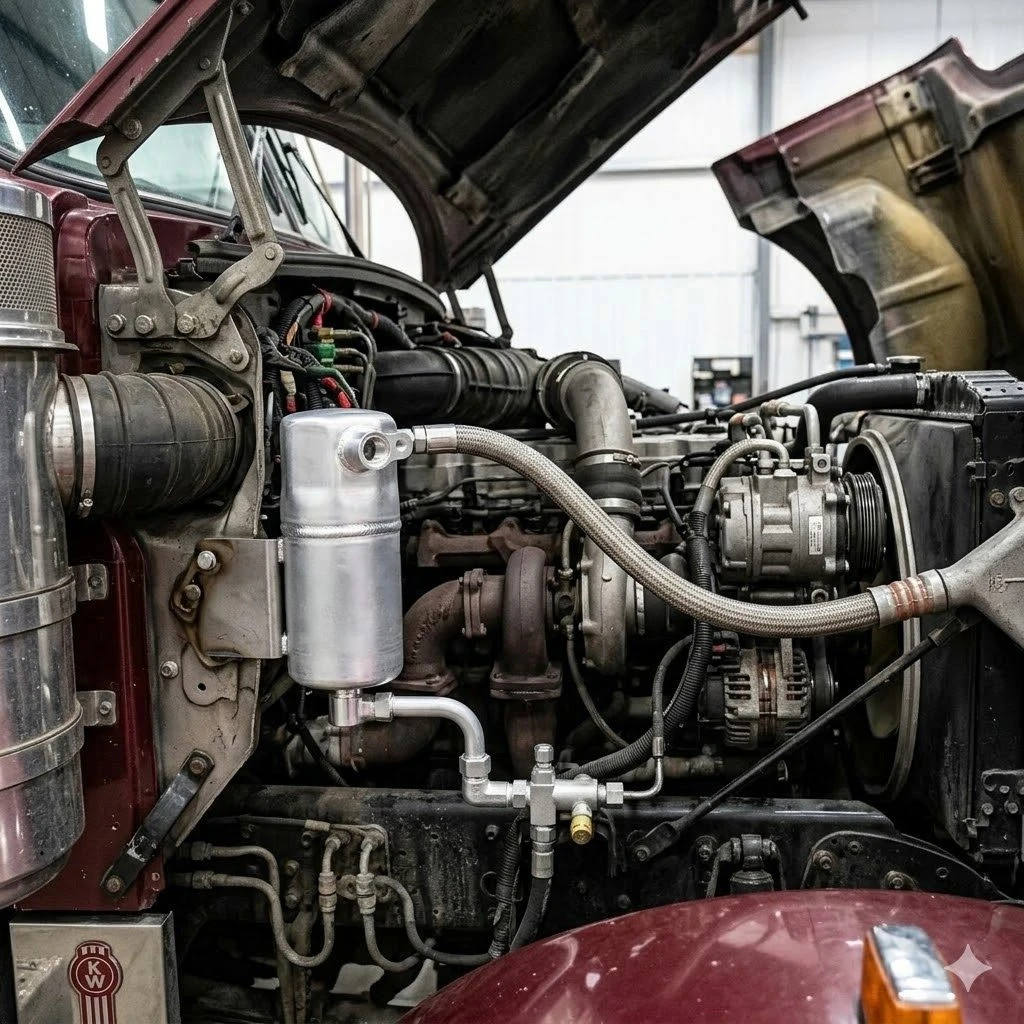
On a Class 8 truck the lines run significant distances — from the compressor on the engine, through the firewall, under the cab, and up to the HVAC box. That routing exposes them to road vibration, heat cycling, abrasion from surrounding components, and the natural aging of rubber hose material. Any breach in the circuit — no matter how small — allows refrigerant to escape, and the system will eventually fail to cool.
Why lines fail more often than the compressor or condenser: The rubber sections of A/C hoses are designed for flex, but flex also means fatigue. A typical semi truck A/C hose cycles through hundreds of thousands of pressure changes over its life. The fittings crimped onto each end are the most common failure point, not the hose body itself.
The Four Line Types on a Class 8 Truck
Understanding which line is leaking matters because pressure, temperature, and construction differ significantly between them:
High-Pressure Discharge Line
Carries hot, high-pressure refrigerant gas from the compressor outlet to the condenser inlet. This line sees the highest temperatures (can exceed 100°C) and highest pressures in the system. It is typically a metal tube with short rubber hose sections at each end to absorb vibration. Failures here are usually at the rubber-to-metal crimp fittings.
High-Pressure Liquid Line
Carries high-pressure liquid refrigerant from the condenser outlet to the receiver drier and then to the expansion valve. This line runs at cooler temperatures than the discharge line but at similar pressure. It is often all-metal (aluminum or steel) with flared fittings at each end.
Low-Pressure Suction Line
The largest-diameter line in the system. Carries low-pressure refrigerant gas from the evaporator outlet back to the compressor inlet. Because it operates at low pressure and below ambient temperature, the outside of this line is often coated in insulating foam to prevent condensation dripping into the cab. This is the most flexible hose in the system and the one most likely to crack at the routing bends over time.
Liquid Line from Drier to Expansion Valve
A short line that connects the receiver drier outlet to the expansion valve inlet. Often the smallest diameter line in the system. On Freightliner Cascadias and Kenworth T680s this line includes a high-pressure service port (the red cap fitting).
5 Signs Your A/C Lines Are Leaking or Failing
1 Oily Residue at Fittings or Along the Hose
Refrigerant oil circulates with the refrigerant to lubricate the compressor. When refrigerant escapes through a small leak, the oil comes with it and leaves a visible residue — a dark, greasy film at the fitting or along a crack in the hose. This is the most reliable visual indicator of a refrigerant leak in the lines. Check around every fitting, every crimp, and every bend in the hose routing.
On trucks that have been on the road for several years, this oily residue may be mixed with road grime, making it dark brown or black. Run a white rag along the hose body — oil contamination will show clearly.
2 System Loses Charge Within Days of a Recharge
If a shop recharges the A/C and cold air returns briefly but is gone again within a week or two, there is a leak — and a line fitting or hose body is the most common location. A properly sealed system holds its refrigerant charge for years. If you're recharging more than once per season, stop spending money on refrigerant and find the leak first.
Do not keep recharging a leaking system. Running low on refrigerant starves the compressor of lubricating oil. The compressor will run dry and seize — turning a $200 hose repair into a $1,500 compressor replacement.
3 Compressor Clutch Short-Cycling
A/C systems use a low-pressure cutoff switch to protect the compressor if refrigerant drops too low. When the charge is borderline, the compressor clutch engages, pressure drops below the cutoff threshold, the clutch disengages, pressure recovers slightly, and the clutch re-engages — cycling rapidly every few seconds. You'll hear a clicking from the compressor area and feel the A/C blowing intermittently cold and warm. This is a clear sign of low refrigerant caused by a leak somewhere in the circuit.
4 Visible Cracking, Swelling, or Abrasion on the Hose Body
The rubber sections of A/C hoses age and harden over time. On trucks with high mileage you may see surface cracking on the outer jacket of the suction hose (the large-diameter low-pressure line), or swelling at a section that has been chafing against a bracket or chassis component. Swelling indicates the inner braid has been compromised and the hose is about to fail — replace it before it lets go on the road.
The discharge line (from the compressor to the condenser) is particularly vulnerable to heat damage on trucks where the routing runs it close to exhaust components. Check for heat-glazed or brittle rubber sections near exhaust manifolds and DPF assemblies.
5 Refrigerant Smell Inside the Cab
R-134a refrigerant is nearly odourless, but the ester oil that circulates with it has a faintly sweet, slightly chemical smell. If you notice this smell inside the cab — particularly when the A/C is first switched on — it suggests refrigerant is leaking from a line that passes through or near the cab interior, most likely the suction line or the liquid line near the expansion valve and evaporator. An evaporator leak produces a stronger smell, but a line leak near the firewall penetration can produce a similar symptom.
Need a replacement A/C line or hose?
OEM-fit A/C lines for Freightliner, Kenworth, Peterbilt, Volvo, Hino & Mack. Same-day quotes for GTA customers.
How to Diagnose a Refrigerant Leak Step by Step
Step 1 — Visual Inspection First
Before connecting gauges, do a thorough visual inspection of every accessible section of A/C line. Follow each line from end to end, running a gloved finger along fittings and bends. Look for the oily residue described in Sign 1 above. Pay special attention to:
- Crimp fittings on both ends of each rubber hose section
- The firewall penetration grommet where lines enter the cab
- Any section where a line passes near a hot component (exhaust, turbo)
- Any section where a line is close to a metal bracket or frame rail (abrasion)
- The service port Schrader valves (depress the core pin — if refrigerant escapes freely, the valve is leaking)
Step 2 — Manifold Gauge Set
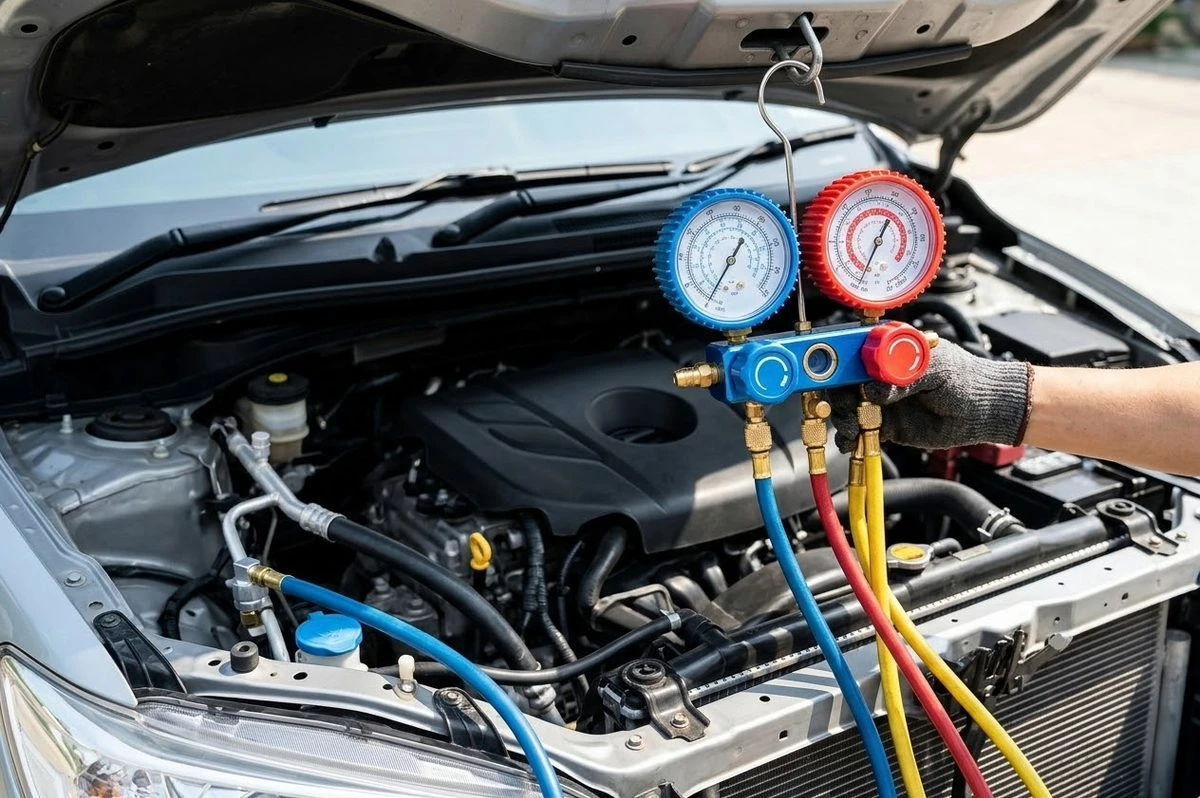
Connect a manifold gauge set to both service ports. With the engine off and system at rest, record static pressure on both the high-side and low-side gauges. On a properly charged R-134a system at typical Canadian summer ambient temperatures (25–35°C), static pressure should be in the 90–120 psi range on both sides. Significantly lower static pressure confirms the system is undercharged, consistent with a leak.
Step 3 — UV Dye Leak Detection
If you can't locate the leak visually, inject UV dye through the low-side service port using a dedicated dye injector tool, recharge the system to proper operating pressure, run the A/C for 10–15 minutes, then inspect every line and fitting with a UV lamp. The dye fluoresces bright green or yellow at the leak point. This is the most reliable method for finding small leaks at fittings that are too minor to leave visible oily residue.
Step 4 — Electronic Leak Detector
An electronic refrigerant leak detector (sometimes called a "sniffer") will audibly alarm when the probe passes near a refrigerant leak. Move the probe slowly along the entire length of each line, pausing at every fitting. Most quality detectors can detect leaks as small as 5 grams per year — far smaller than what produces visible oily residue.
Step 5 — Pressure Decay Test
If you suspect a slow leak but can't locate it with dye or a sniffer, charge the system to its rated operating pressure with dry nitrogen (not refrigerant), shut off all valves, and monitor system pressure for 30–60 minutes. Any pressure drop confirms a leak exists. This test is particularly useful for shops that want to verify a repair before recharging with refrigerant.
What to Replace at the Same Time
When you replace an A/C line or hose, the system must be opened, evacuated, and recharged. The labour to open the circuit is the same whether you replace one component or several, so consider replacing adjacent parts that are near end of life at the same time:
O-Rings at Every Disturbed Fitting
Every time you disconnect an A/C fitting, replace the O-ring. A/C O-rings are inexpensive (under $5 each) and are the most common source of slow leaks after a repair. Reusing an old O-ring after disturbing a fitting is false economy. Use O-rings rated for R-134a — standard rubber O-rings will swell and leak. See our A/C O-ring selection for the correct sizes by make and model.
Receiver Drier
The receiver drier contains a desiccant that absorbs moisture from the refrigerant circuit. Every time the A/C system is opened to atmosphere, the desiccant is exposed to ambient humidity and begins to saturate. A saturated desiccant allows moisture into the system, which combines with refrigerant to form hydrofluoric acid that destroys the compressor and expansion valve internally. Replace the drier every time the system is opened, without exception.
Expansion Valve
If the system has been run low on refrigerant for an extended period, the expansion valve may have been damaged by debris or moisture. If the vehicle is high-mileage (over 800,000 km) or the expansion valve has never been replaced, consider replacing it at the same time as the hose repair while the system is already open.
Replacement Cost in Canada (2026)
A/C line and hose replacement costs in Canada vary based on which line is leaking, the make and model, and whether the shop fabricates the hose or sources a direct-fit replacement.
| Component | Part Cost (CAD) | Labour (hrs) | Total Estimate (CAD) |
|---|---|---|---|
| Single A/C hose (rubber section) | $80–$180 | 1–2 h | $230–$480 |
| High-pressure discharge line | $150–$350 | 1.5–3 h | $300–$800 |
| Suction line (low-pressure) | $120–$280 | 1.5–2.5 h | $270–$680 |
| Complete line set (all lines) | $400–$900 | 4–6 h | $800–$1,800 |
| O-rings (all fittings) | $20–$50 | Included | $20–$50 |
| Receiver drier (recommended) | $80–$180 | 0.5 h | $130–$280 |
| Refrigerant recharge (R-134a) | $80–$150 | 0.5–1 h | $130–$250 |
Labour rate assumed at $100–$130/hr. Prices in CAD. Sourcing your own OEM-fit lines reduces the total by 20–40%.
Save on the total repair: Sourcing the lines yourself and delivering them to your shop is the single most effective way to reduce the bill. The parts markup at a typical repair shop is 25–45% over cost. Bringing your own OEM-fit lines eliminates that entirely while keeping the same quality.
Make-Specific Notes
Freightliner Cascadia (2008–2025)
The Cascadia's A/C lines run along the left side of the engine bay before passing through the firewall. The discharge hose fitting at the compressor outlet is a known leak point on higher-mileage trucks — the o-ring seat on the aluminum compressor fitting can wear slightly, making a perfect seal difficult to achieve with a standard O-ring. Use a reinforced O-ring at this connection. The suction line grommet at the firewall penetration also hardens and cracks on trucks operated in cold climates. Inspect both locations first.
Kenworth T680 & Peterbilt 579 (PACCAR Platform)
The T680 and 579 share the same HVAC architecture. The liquid line from the condenser to the drier runs behind the front bumper, making it vulnerable to road debris and winter salt spray. On trucks with over 600,000 km, check this line for corrosion at the flared fittings — aluminum line with steel fittings is a corrosion combination that causes fitting failures in Canadian winters.
Volvo VNL (2018–2025)
Volvo VNLs use a cab-mounted evaporator unit with a fairly complex line routing through the cab floor. The most common failure is the rubber coupling between the metal discharge line and the compressor — this section is under high vibration stress from the D13 engine mount location. Inspect the discharge line rubber section at the compressor fitting every major service interval.
Mack Anthem & Pinnacle
Mack's MP8 and MP7 engines run hot, and the A/C discharge line routing on the Anthem passes relatively close to the exhaust aftertreatment system on some configurations. Heat-accelerated rubber degradation is common here. If a Mack Anthem A/C is losing charge with no visible external leak, trace the discharge line near the DPF — it may have micro-cracks from heat exposure that are only detectable with a UV lamp.
Hino 268 & 338
Hino medium-duty trucks use a simpler A/C line layout than Class 8 long-haul trucks, but the suction hose at the bulkhead fitting is a recurring failure point — the factory clamp design allows the hose to walk slightly over time, eventually pulling away from the barbed fitting. Hino owners should check the bulkhead connection annually. Replacement hose is widely available as a cut-to-fit section.
International LT & RH
International's A7 and A26 engine-equipped trucks route the A/C discharge line on the passenger side of the engine bay. The discharge line o-ring at the condenser inlet fitting is a known early-wear item on pre-2022 builds — International issued a service bulletin recommending upgraded o-ring material at this connection. If this fitting is leaking on an older International LT, ask specifically for the updated o-ring specification rather than a standard replacement.
Frequently Asked Questions
Can I drive with a leaking A/C line?
You can drive the truck, but do not run the A/C compressor if the system is significantly undercharged. Running the compressor with low refrigerant starves it of lubricating oil and causes accelerated wear or immediate seizure. Turn the A/C off and schedule the repair. The truck's cooling system (engine coolant) is completely separate and unaffected by an A/C refrigerant leak.
How long do semi truck A/C hoses last?
Original equipment A/C hoses on Class 8 trucks typically last 8–12 years or 800,000–1,200,000 km under normal conditions. Trucks operating in extreme temperature climates (Canadian winters combined with hot summers), or trucks with exhaust routing close to A/C lines, tend to see hose failures earlier — sometimes at 500,000–700,000 km. Rubber sections age faster than metal lines regardless of mileage.
Is it worth repairing a leaking fitting vs. replacing the whole hose?
If the leak is at a fitting and the hose body is in good condition, a fitting repair is appropriate. However, if the hose is over 8 years old or showing any external cracking, replace the whole assembly — a new leak will likely appear at a different point on the same aging hose within the next season. The labour to open the system is the same either way.
What refrigerant do Class 8 semi trucks use?
Most Class 8 trucks built between 1994 and 2025 use R-134a refrigerant. Some 2024–2025 model year trucks (particularly Freightliner Cascadia and Volvo VNL) are beginning to transition to R-1234yf, which has a lower global warming potential. Check the A/C service label on your truck before purchasing refrigerant — the two types are not interchangeable and use different service ports.
Can I repair an A/C hose with tape or a hose clamp?
No. A/C refrigerant operates at pressures between 150–300 psi on the high side. No tape, clamp, or generic hose repair kit will hold at those pressures. A temporary patch will fail quickly and may fail suddenly, venting pressurized refrigerant near hot engine components. Replace the hose properly.
Why did my A/C fail again right after a compressor replacement?
This is almost always a pre-existing leak in the lines that wasn't identified before the compressor was replaced. When the new compressor is installed and the system recharged, the refrigerant slowly escapes through the same leak. Always perform a full leak check — with UV dye or an electronic detector — before recharging after any A/C repair. If the previous compressor failed due to low oil (from a long-standing refrigerant leak), also flush the lines before installing the new unit to remove any debris.
Need A/C Lines or Hoses?
OEM-fit A/C lines and hoses for all major Class 8 makes. In stock. Same-day quotes for GTA customers — Canada-wide shipping.
True Truck Parts
Heavy Duty Cooling & A/C Specialists — GTA, Canada
Our team specializes in cooling and A/C parts for Class 8 semi trucks, serving fleet operators and owner-operators across the Greater Toronto Area and Canada. We stock OEM-fit parts for Freightliner, Kenworth, Peterbilt, Volvo, Mack, Hino, International and Western Star.