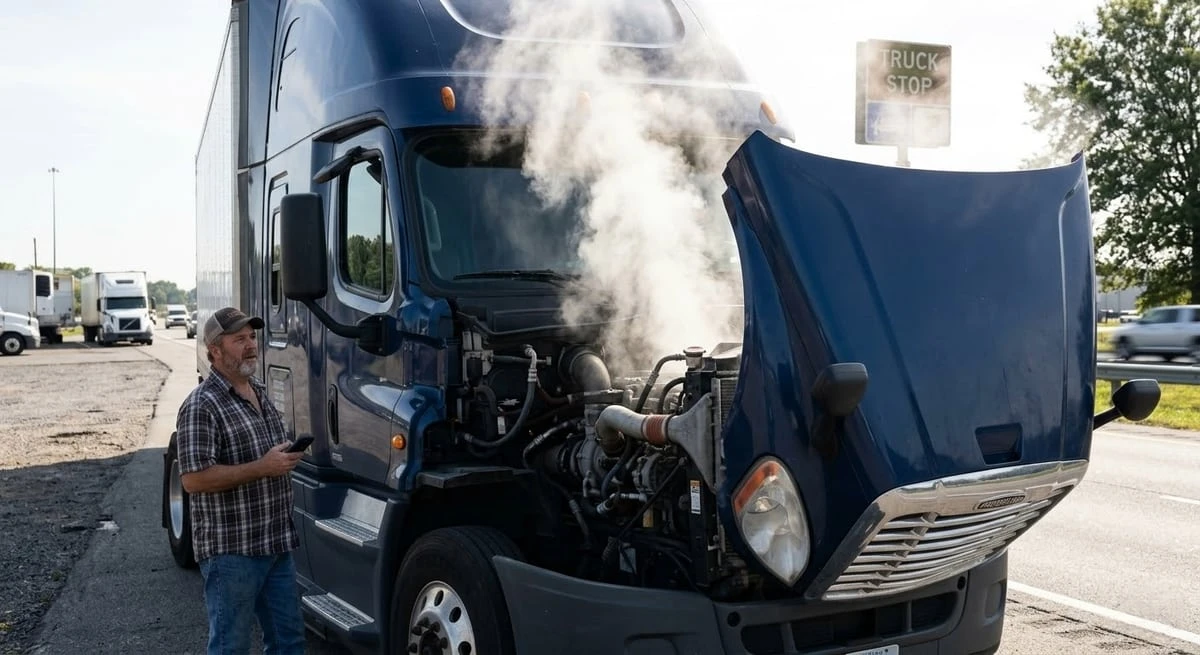
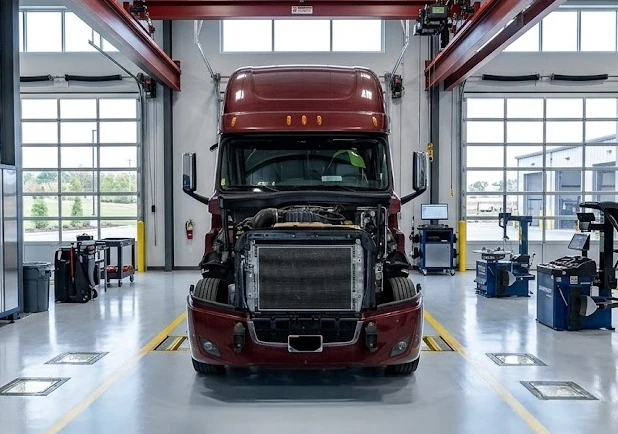
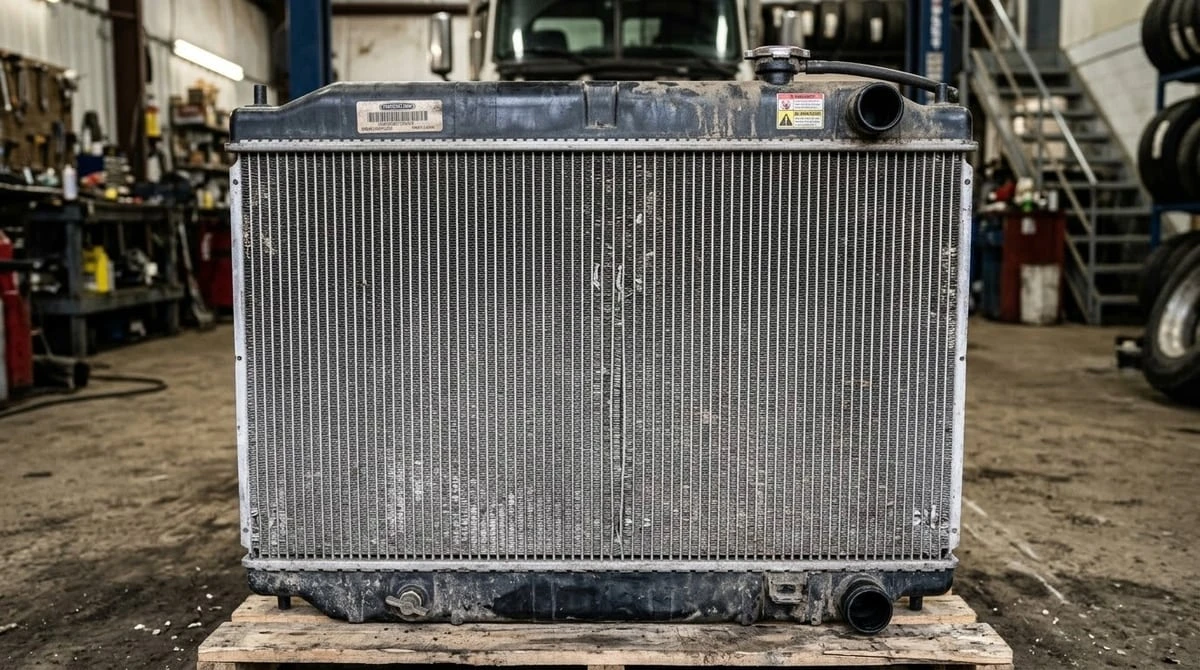
Hino trucks are everywhere in the GTA — food distribution, building supply, last-mile delivery, municipal fleets. The 268 and 338 run hard on city routes: stop-and-go traffic, idling, tight delivery windows. That kind of operation puts consistent stress on the cooling system, and Hino's compact engine bays leave little margin when something starts to fail.
This guide covers the five most common Hino cooling system problems, how to identify them early, which models are most affected, and where to source OEM-fit replacement parts in the GTA.
Overheating in a Hino 268 or 338 typically traces back to one of five components. Identifying the source early prevents engine damage and costly downtime.
In this article
Why Hino Cooling Systems Need Attention
Hino trucks run Hino J-series diesel engines — the J05E in the 268, J08E in the 338, and the A09C in the XL Series 8. These are reliable, well-proven powerplants, but they share a characteristic: they run warm by design. Hino engines operate closer to their thermal ceiling than North American Class 8 diesels, and the cooling system has less buffer before a minor issue becomes a problem.
City delivery routes compound this. A Hino running 80 stops per day in Mississauga or Vaughan in July — idling, loading, in traffic — is constantly cycling the cooling system. The thermostat opens and closes hundreds of times per shift. The coolant reservoir pressurizes and depressurizes repeatedly. Components that would last years on a highway truck wear faster in urban service.
The good news: Hino cooling problems are predictable. The same five components fail, in the same order of frequency. Knowing what to look for means you catch it before the temperature gauge moves.
5 Most Common Hino Cooling System Problems
1 Cracked or Leaking Coolant Reservoir (Degas Bottle)
This is by far the most common Hino cooling complaint we see from GTA fleets. The coolant reservoir — also called a degas bottle or coolant overflow tank — on the 268 and 338 is a plastic tank mounted near the radiator. It acts as a pressure buffer for the cooling system: coolant expands into it as the engine heats up and returns as it cools.
The problem is that Hino's OEM coolant tanks are exposed to constant pressure cycling and heat. Hairline cracks develop along the seams and at the mounting points, most often after 200,000–350,000 km of urban service. Once a crack forms, the pressurized system slowly loses coolant — often through a seam that only leaks when the engine is hot. By the time a driver notices the low coolant warning, the system has been losing coolant for days.
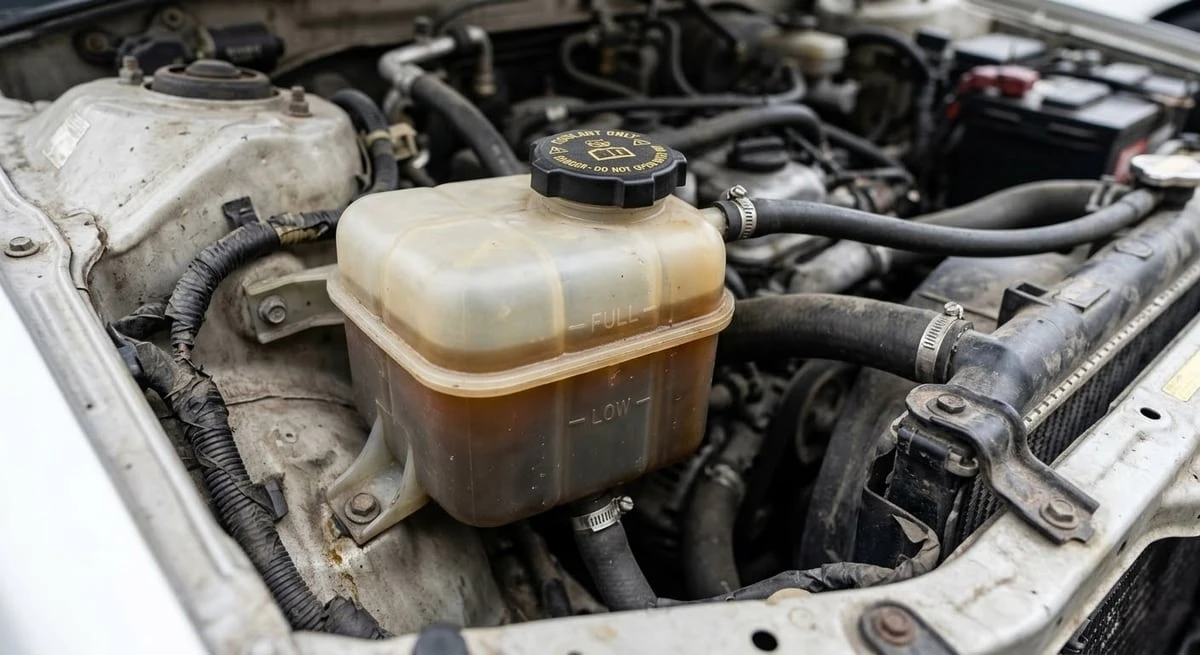
Discoloured coolant and white residue around the reservoir seams are early signs of a failing degas bottle. Check the tank cold, when pressure is lowest.
How to identify it: Look for white or orange mineral deposits around the tank seams and mounting points. Check coolant level cold — if it's consistently low without an obvious external puddle, the tank is likely weeping. A pressure test of the cooling system will confirm it.
GTA fleet tip: If you run a Hino 268 or 338 fleet in urban service, budget for coolant reservoir replacement at 250,000 km as preventive maintenance. The part is inexpensive — the downtime from a cracked tank that causes an overheating event is not.
2 Radiator Leaks and Core Clogs
Hino radiators use a plastic end-tank / aluminum core construction. The end tanks are crimped to the core — and over time, that crimp joint develops micro-leaks. This is most common on older 338s with high mileage, and on trucks that have had coolant neglected (acidic old coolant accelerates corrosion of the aluminum core).
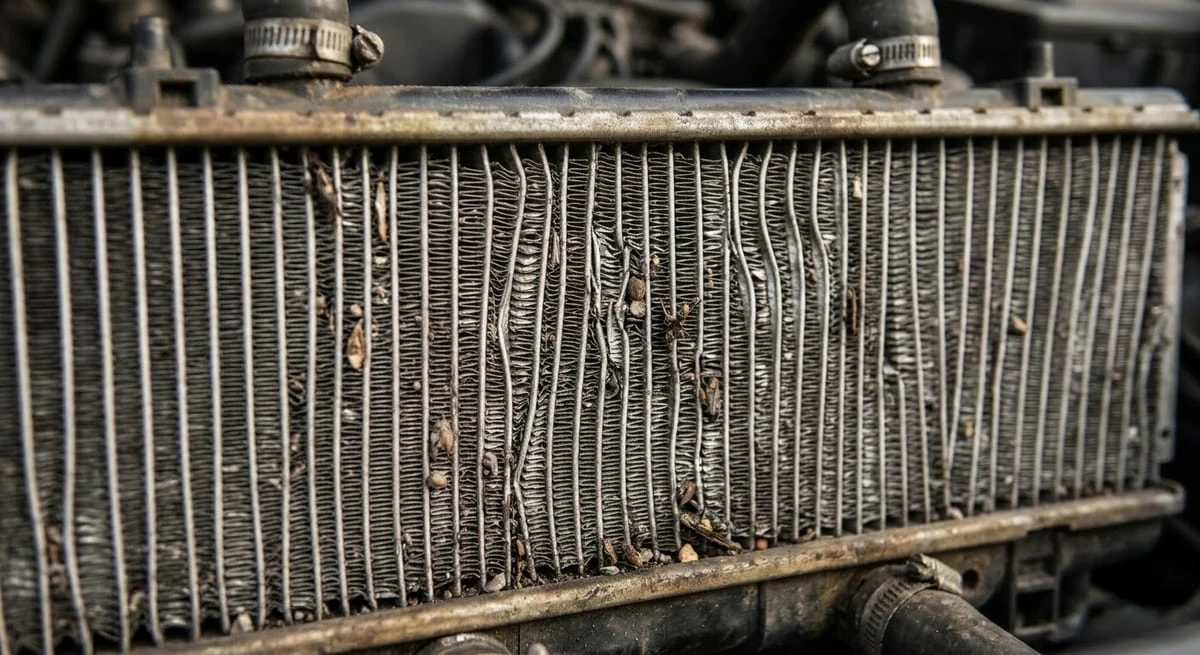
Hino trucks running urban routes also accumulate road grime and debris on the radiator face. The compact front end of a 268 or 338 means the radiator sits close to the grille — which is great for airflow at highway speed but lets fine particulate build up at low speeds in urban traffic. A 20–30% blockage of the radiator face is enough to cause temperatures to creep up on hot days or in heavy traffic.
Fin blockage builds gradually on urban routes. Even a 25% reduction in airflow through the core can cause temperature creep on hot days. A seasonal cleaning extends radiator life significantly.
How to identify it: Inspect the radiator face at each PM service. Look for coolant staining (orange/green deposits) at the end tank crimps. If the truck runs hot on warm days but stabilizes on the highway, restricted airflow through a dirty core is the likely cause before assuming radiator failure.
3 Thermostat Failure
The thermostat in Hino J-series engines is a wax-element thermostat that opens to allow coolant to flow through the radiator once the engine reaches operating temperature. They're inexpensive parts, but they fail in two ways — and each produces different symptoms.
- Stuck closed: The engine overheats because coolant can't reach the radiator. Temperature climbs quickly and the heater blows hot. This is the dangerous failure mode — pull over and shut down.
- Stuck open: The engine takes a long time to warm up, never reaches full operating temperature, and fuel economy drops. The cab heater blows lukewarm. Less urgent but still needs attention — running cold increases engine wear and reduces DPF regeneration efficiency.
Thermostat replacement on a Hino is a straightforward job and the part is inexpensive. If a Hino is overheating and the coolant level is correct and the radiator is clean, the thermostat is the next thing to check.
4 Water Pump Wear
The water pump circulates coolant through the engine and radiator. On Hino J-series engines, water pump wear typically shows up as weeping from the weep hole (a small hole on the pump housing designed to signal bearing failure) or as a failing impeller — the plastic impeller on some Hino water pumps can spin freely on the shaft after the pressed fit deteriorates, reducing or eliminating coolant flow while the pump appears to be spinning normally.
A water pump with a spinning impeller is particularly deceptive: the temperature climbs slowly, the coolant level stays correct, and there's no obvious leak. The only way to confirm it is to check coolant flow directly or replace the pump as part of a diagnosis by elimination.
Watch for: Coolant weeping from the pump weep hole, coolant staining on the timing cover below the pump, or a high-pitched whine from the front of the engine at idle. Any of these means the pump needs replacement before it fails completely.
5 Fan Clutch and Drive Belt Issues
The engine cooling fan on a Hino is driven by a viscous fan clutch. When the clutch wears, the fan doesn't spin fast enough — particularly at low vehicle speeds and at idle, which is exactly when a city delivery truck needs maximum cooling. A worn fan clutch will often allow the truck to run normally on the highway (where ram air through the grille is sufficient) but cause overheating in traffic.
The drive belt that powers the fan, water pump, and alternator also deserves inspection at every service on high-mileage Hino trucks. A slipping or cracked belt reduces water pump speed and, in the case of complete failure, stops coolant circulation entirely.
Need a Hino coolant tank or radiator?
OEM-fit parts for Hino 268, 338, XL7 & XL8. Same-day quotes. GTA pickup or Canada-wide shipping.
Cooling System Issues by Hino Model
Hino 268 (J05E Engine)
The 268 is the most common Hino in GTA urban fleets — 26,000 lb GVWR, J05E 5.1L diesel. The coolant reservoir is the highest-frequency failure point. On city routes, budget for replacement at 250,000–300,000 km. The J05E thermostat is inexpensive and easy to access — include it in cooling system work. Radiator end-tank leaks become more common after 400,000 km; if you're seeing coolant staining at the end tanks on a high-mileage 268, replacement is more economical than repair.
Hino 338 (J08E Engine)
The 338 runs the larger J08E 7.7L diesel and is used for heavier loads. The bigger engine produces more heat, which means the cooling system works harder. Radiator core clogs from road debris are more prevalent on the 338 because the front is lower to the ground. The water pump on the J08E uses the plastic impeller design — check for shaft play at each PM. Fan clutch wear shows up more noticeably on the 338 in stop-and-go traffic because of the higher heat load.
Hino XL7 / XL8 (Series 7 & 8)
The XL series introduced the A09C engine (9L) for heavier applications. The XL's cooling system is more robust than the medium-duty 268/338, but the coolant reservoir remains a watch item — the plastic tank design is similar and subject to the same pressure cycling fatigue in high-cycle urban applications. The XL's larger radiator is more resistant to complete blockage but still benefits from seasonal cleaning. Thermostat replacement intervals should follow Hino's recommended coolant change schedule — degraded coolant deposits accelerate thermostat wear.
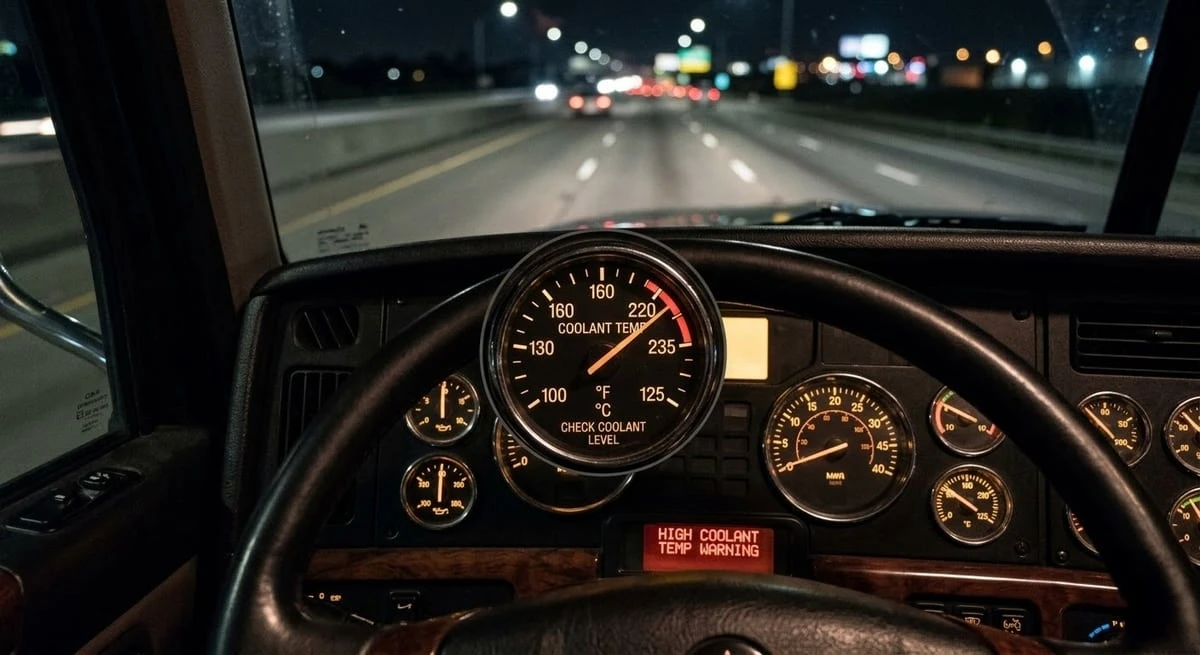
Normal Hino operating temperature sits between 85°C and 100°C. If the gauge climbs above the midpoint, pull over and investigate before it reaches the red zone.
How to Diagnose Hino Overheating — Step by Step
When a Hino starts running hot, work through these checks in order before replacing any parts. Most Hino overheating events trace back to one of the first three checks.
- Check coolant level (cold engine only). Remove the reservoir cap when the engine is cold. The level should be between MIN and MAX. Low coolant with no visible puddle under the truck points to a weeping coolant tank or radiator seam.
- Inspect the coolant reservoir. Look for white or orange mineral deposits around the seams and at the cap. Flex the tank gently — hairline cracks sometimes open under light pressure. Any staining means the tank is leaking and needs replacement.
- Check the radiator face. With the truck cold and engine off, look through the grille at the radiator. A visibly dirty or blocked core needs cleaning before you can assess anything else. Use compressed air from the engine side out to blow debris clear.
- Check the coolant condition. Pull the dipstick or remove the lower hose to check coolant colour. Hino trucks use pink/red LLC (Long Life Coolant). Rust-brown, milky, or clear coolant means the system needs flushing and the source of contamination needs to be identified. Milky coolant may indicate a head gasket issue — a separate problem.
- Inspect the fan clutch. With the engine warmed up and running, open the hood and observe the fan. It should be spinning vigorously. At idle, a worn clutch will allow the fan to spin slowly — you can sometimes stop it with light resistance from a glove. A worn clutch needs replacement.
- Check for thermostat stuck closed. If coolant level and radiator are fine but the truck overheats quickly from startup, feel the upper radiator hose after 5 minutes of running. If it's not getting hot, coolant isn't flowing through the radiator — the thermostat is stuck closed.
Never open the coolant cap on a hot Hino. The system runs at 95–110 kPa pressure. Opening the cap on a hot engine causes a violent steam release and can cause serious burns. Always let the engine cool for at least 30 minutes before opening the cooling system.
Need a Hino radiator quote?
OEM-spec Hino radiators in stock. Vaughan, Mississauga, Brampton — same-day pickup. Ships Canada-wide.
Hino Cooling Parts Available in the GTA
Finding Hino-specific cooling parts quickly in the GTA used to mean waiting on a dealer order or sourcing from overseas. True Truck Parts stocks OEM-fit cooling components for the Hino 268, 338, and XL series — available for same-day pickup in Vaughan or shipping Canada-wide.
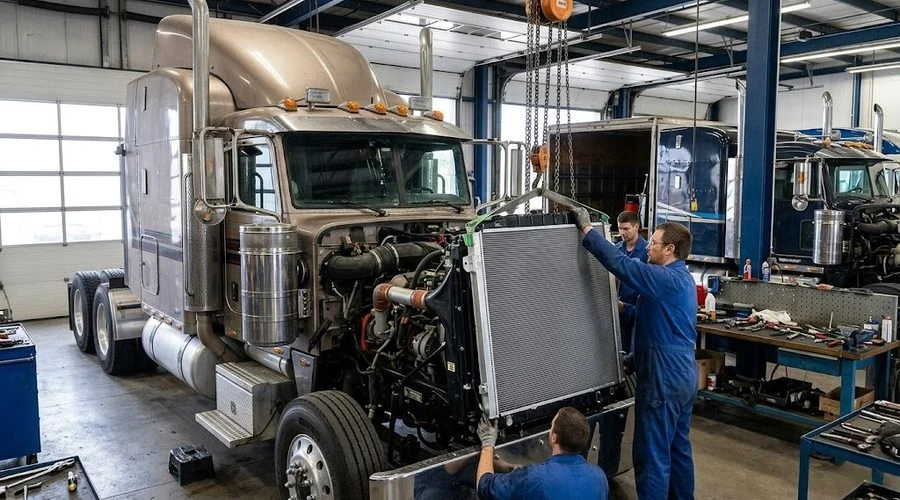
OEM-fit means the part drops in without modification — correct mounting points, correct hose connections, correct pressure ratings. Don't substitute a universal radiator on a Hino.
Parts We Stock for Hino Trucks
- Coolant reservoirs / degas bottles — direct-fit for Hino 268 (J05E) and 338 (J08E)
- Radiators — OEM-spec aluminum core with plastic end tanks, correct fitment by model year
- Thermostats — J05E and J08E specific, correct opening temperature
- Water pumps — complete assemblies, metal impeller upgrades available
- A/C compressors — for Hino cab A/C systems
- A/C receiver driers — replace at every A/C service
To get a same-day quote, contact us with your Hino model year and VIN. We'll confirm fitment and availability on the spot. Most in-stock Hino cooling parts can be ready for same-day pickup in Vaughan or dispatched same-day for next-morning delivery across the GTA.
Frequently Asked Questions
What is the most common cooling problem on a Hino 268?
A cracked or leaking coolant reservoir (degas bottle). The plastic tank on the 268 is subject to repeated pressure cycling on urban delivery routes and develops hairline cracks at the seams — typically between 200,000 and 350,000 km. It's an inexpensive fix when caught early.
Why does my Hino 338 overheat in traffic but not on the highway?
The most likely causes are a worn fan clutch (not spinning fast enough at low speeds) or a clogged radiator face (blocked by road debris). Highway speed provides enough ram air through the grille to compensate; in slow traffic, the engine relies entirely on the fan. Check the fan clutch engagement and clean the radiator face first.
What coolant does a Hino truck use?
Hino trucks require pink/red LLC (Long Life Coolant) — specifically a silicate-free, OAT (Organic Acid Technology) type coolant. Do not use conventional green coolant or silicate-based antifreeze. Hino recommends changing the LLC every 2 years or as specified in the maintenance schedule.
Can I get Hino cooling parts in Vaughan or Mississauga?
Yes — True Truck Parts stocks OEM-fit Hino coolant tanks, radiators, thermostats, and water pumps with same-day pickup available. Use our contact form to confirm availability for your model year and VIN. We also ship Canada-wide.
How long does a Hino radiator last?
600,000 to 900,000 km under normal highway service. On urban routes with frequent stop-and-go and high-heat cycles, plan for replacement at 500,000–700,000 km. Seasonal cleaning and maintaining correct coolant chemistry significantly extend service life.
Is a Hino coolant tank the same as a degas bottle?
Yes — the terms are used interchangeably. The coolant reservoir, degas bottle, overflow tank, and coolant expansion tank all refer to the same component: the plastic tank that acts as a pressure buffer for the cooling system. On Hino trucks it is a pressurized, sealed unit — not a simple overflow bottle.